

How to Host a Holiday Dinner Party with Friends
When the holiday season arrives, it can feel overwhelming almost instantly — the galas, the school events, the shopping, the obligations stacking up before December has even found its footing. That is exactly why, every year, I make a point to know how to host a holiday dinner party in the first week of December. Before the calendars fill. Before the chaos sets in. It is a warm, intentional way to say hello to the season — not from a place of stress, but from a place of genuine joy.
What I love most about this gathering is the intimacy of it. My sweet spot is twelve to thirteen guests — intimate enough that you remember every conversation, large enough that no one is left without someone to talk to. This is not your traditional Christmas dinner. There is no family obligation, no assigned seat at someone else’s table. This is a friends’ holiday dinner — and that distinction matters. It is the one night of the season that belongs entirely to your inner circle, styled and hosted the way you want it to feel.
Moreover, what makes this gathering so versatile is that you can shape it around whatever feels right for your group. An ornament exchange. A theme gift night. A pure gathering with no agenda beyond good food, great people, and a signature holiday cocktail in hand. In this guide, I am walking you through every element — from setting the date and building the tablescape to planning the menu and choosing the drink that sets the tone the moment guests walk through the door.
Hosting Tips
Plan For An Early December Friends Dinner
The first week of December is the sweet spot — before packed calendars and holiday obligations take over. Hosting early in the month makes the dinner feel like a gift to everyone, not one more thing to squeeze in.
A Holiday Ornament Exchange
This gathering is the perfect anchor for an ornament exchange — the table is already set beautifully, the drinks are festive, and the gift element gives the evening a fun, memorable structure. Every guest leaves with something lovely.
A Girls’ Holiday Night
Not every holiday gathering needs to be co-ed or family-centered. A girlfriends’ holiday dinner is one of the most joyful, easiest-to-style events of the season. The conversation is better, the photos are beautiful, and the energy is lighter.
A Corporate Holiday Celebration
This format translates beautifully to a workplace or team setting — intimate enough to feel personal, elevated enough to impress. A seated dinner at this scale communicates care and intention in a way a cocktail party simply cannot.
A Pre-Christmas Gathering
For guests who travel or spend Christmas away, a pre-holiday dinner becomes the celebration — the moment they get to feel the season with their chosen people before scattering. That weight makes the evening feel especially meaningful.
A Holiday Dinner Party Debut
If this is your first time hosting a formal dinner, this is the perfect starting point. The guest count is manageable, the theme does a lot of the decorating work for you, and the format is forgiving enough to feel relaxed while still looking stunning.
1. Set the Date — And Set It Early
Timing is the single most important decision you make when planning a holiday dinner party. The earlier in December you commit to a date, the better. I always host in the first week of the month — before work holiday parties, school events, shopping weekends, and travel plans lock everyone in. Guests are more relaxed, more available, and genuinely appreciative of the timing.
HOSTING TIP:
Send your save-the-date the week before Thanksgiving. By the time December arrives, your guests already have it on the calendar — and you are not competing with anyone else.
Best Dates to Host
- First Friday or Saturday of December — highest availability, still feels seasonal
- Second weekend of December — still early enough to avoid peak conflict
- Weeknight early December — works well for intimate groups who live nearby
For more timing inspiration, check out my holiday ornament exchange guide — it pairs perfectly with a December dinner.
2. Choose Your Gathering Angle
One of the things that makes a friends’ holiday dinner so enjoyable to host is that you can shape it around whatever feels most natural for your group. Not every gathering needs a structured activity — sometimes the table, the food, and the people are enough. That said, having a light theme or intention gives the evening a memorable through-line.
Three Angles That Work Beautifully
The Ornament Exchange. Each guest brings a wrapped ornament — you can set a price range or a theme. Guests draw numbers, select ornaments, and steal from each other. It is festive, easy to facilitate, and gives everyone something to take home.
The Theme Gift Night. Set a category — a book, a candle, a hostess gift under $30 — and let guests bring something in that spirit. It creates a gifting moment without the pressure of a full exchange.
The Pure Gathering. No agenda beyond good food, great people, and a beautiful table. Sometimes the most memorable evenings are the ones with the least structure.
Equally important, whichever angle you choose, communicate it clearly on the invitation. Guests appreciate knowing what to expect — and it removes any anxiety about whether they needed to bring something.
If you are planning a spring gathering too, my baby shower hosting guide has beautiful ideas that translate across seasons.
3. Build Your Guest List
For a holiday dinner at this register, twelve to thirteen guests is the sweet spot. It is intimate enough to hold real conversation across the table, and large enough that the room feels full and festive. More than fifteen starts to shift the energy — the noise level rises, the hosting becomes more logistical, and the intimacy that makes this gathering special begins to dissolve.
Guest List Considerations
- Invite people who will genuinely show up — this dinner depends on real presence
- Mix your circles intentionally — women from different parts of your life create the best conversations
- Confirm RSVPs one week out and send a reminder two days before
- Have a waitlist of one or two if you have more interest than seats
For more hosting inspiration, my holiday dinner ornament exchange post shows exactly how this guest count works in practice.
4. Design a Holiday Tablescape That Feels Intentional
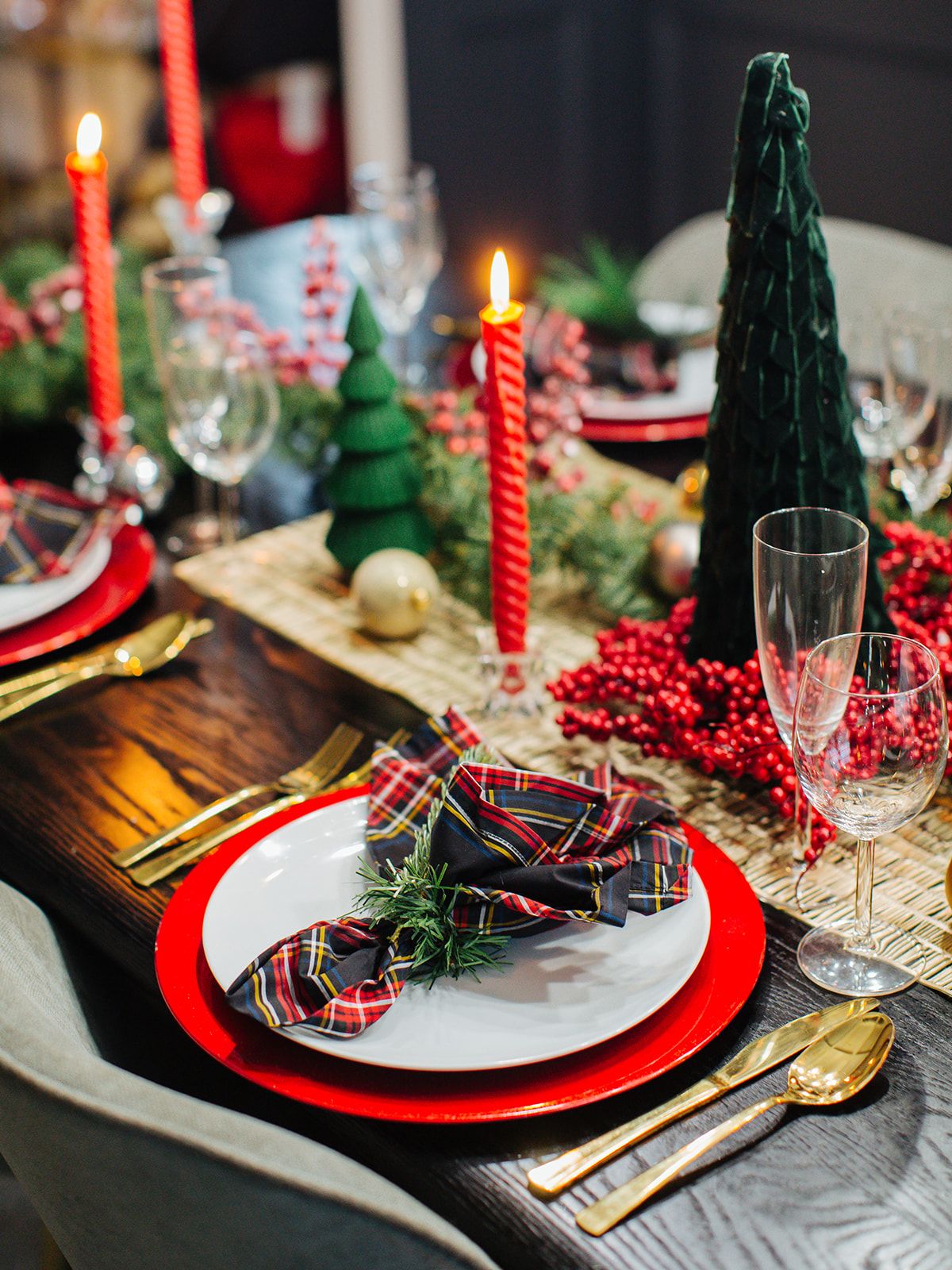
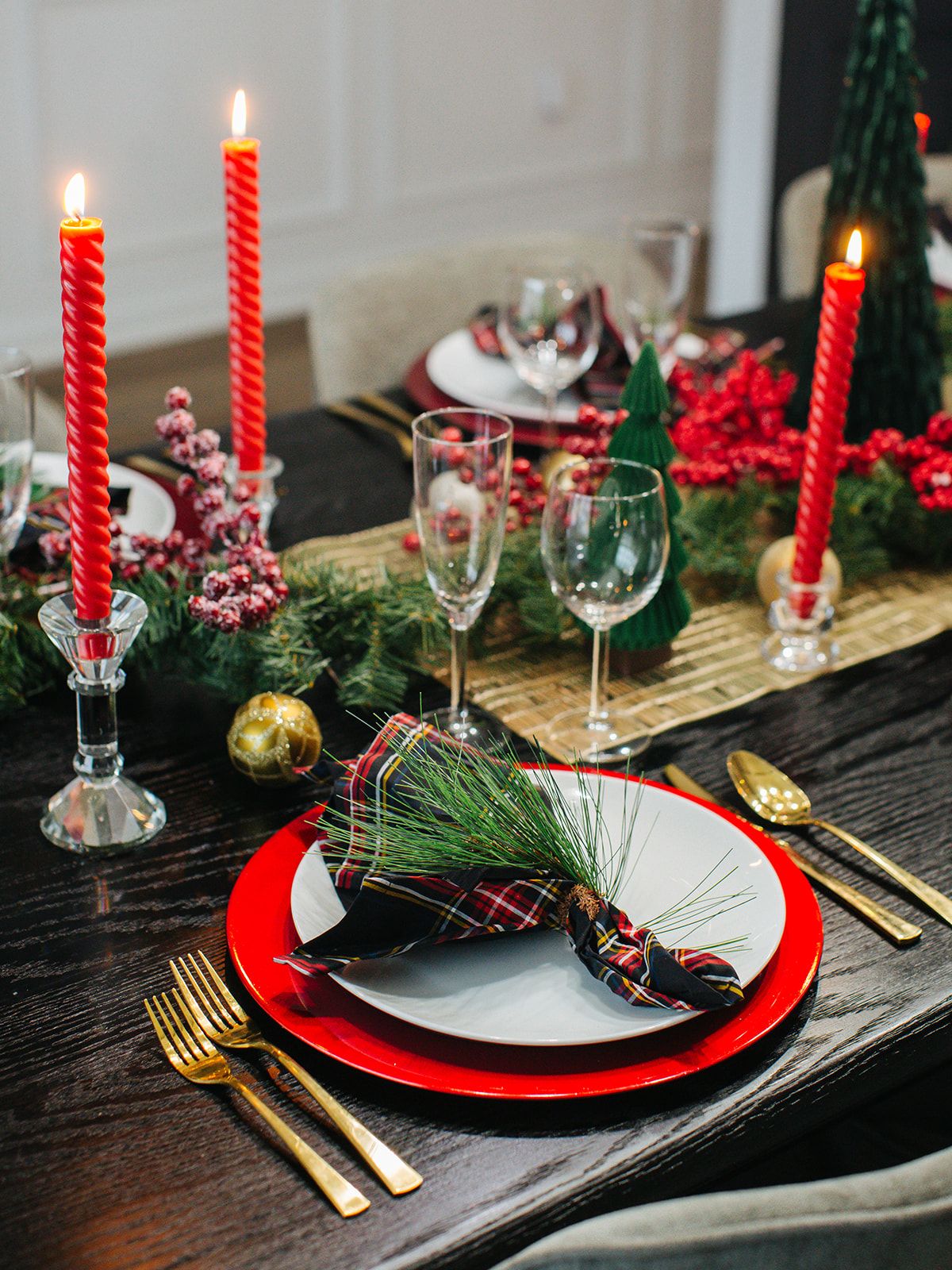
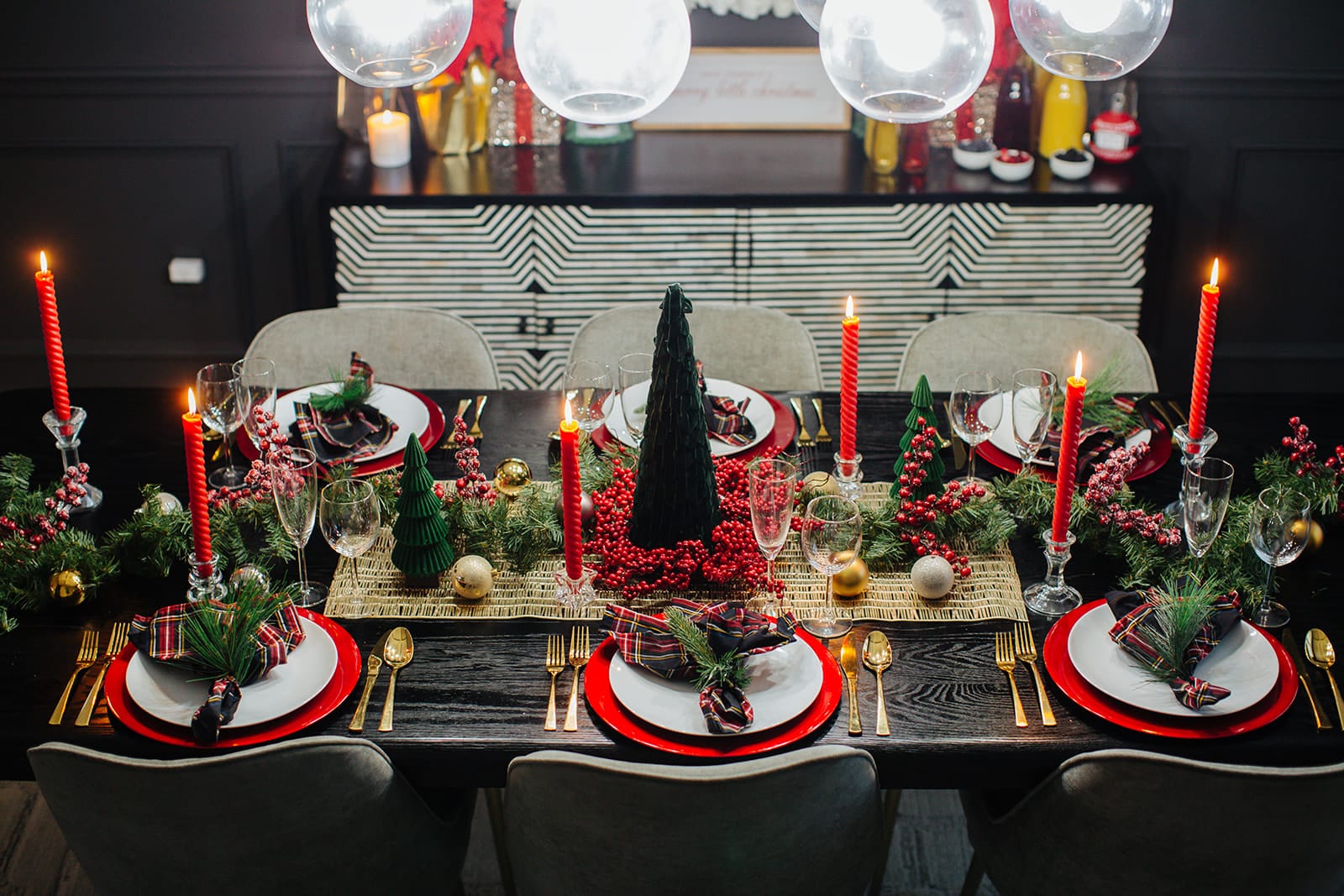
The tablescape is the first thing guests see when they walk into the room — and for a holiday dinner, it does more than decorate the table. It sets the emotional tone for the entire evening. The goal is not excess. It is cohesion. A few well-chosen elements, repeated consistently, will always read more elevated than a dozen competing decorations.
The Five Elements That Build a Holiday Tablescape
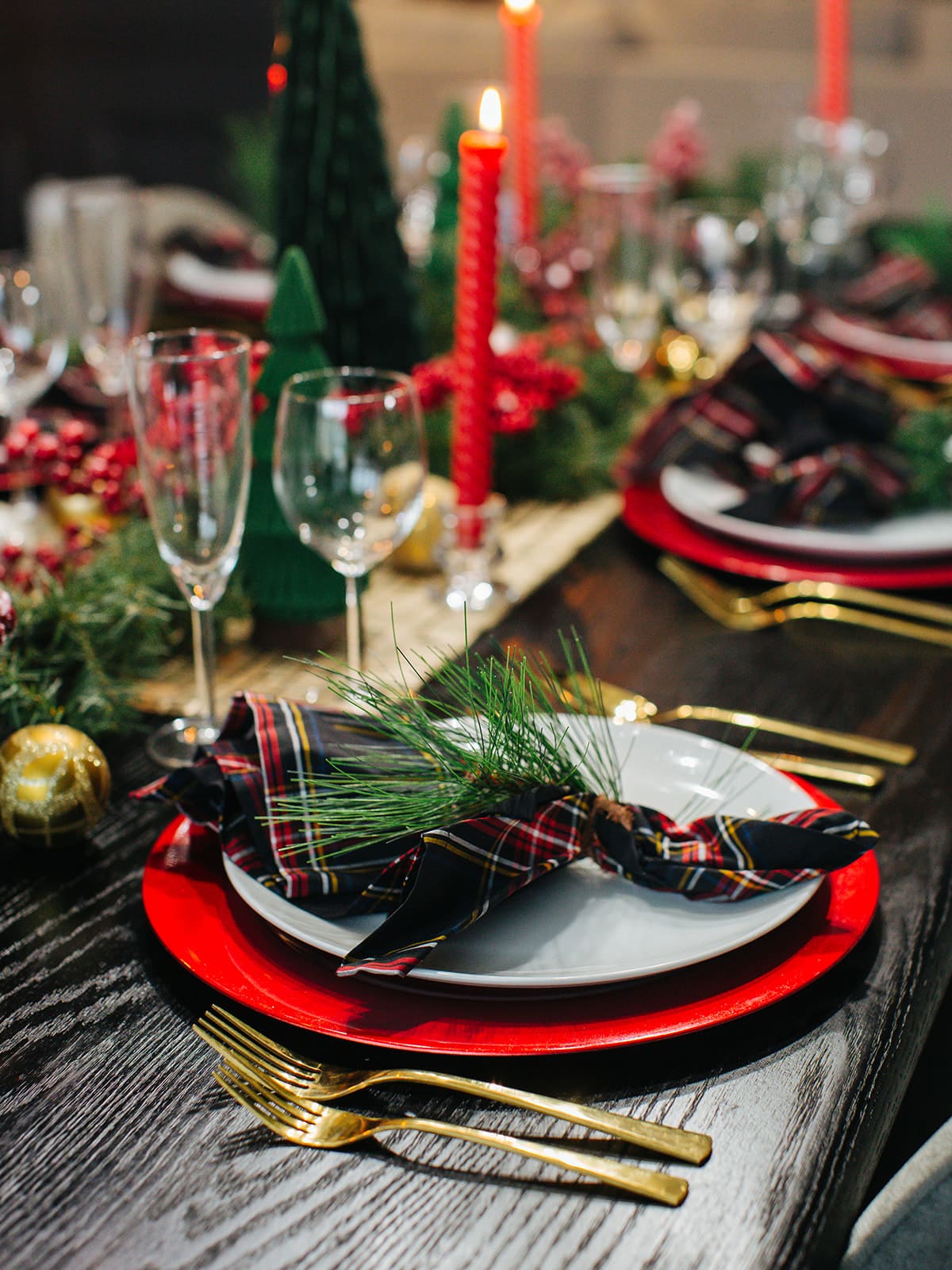
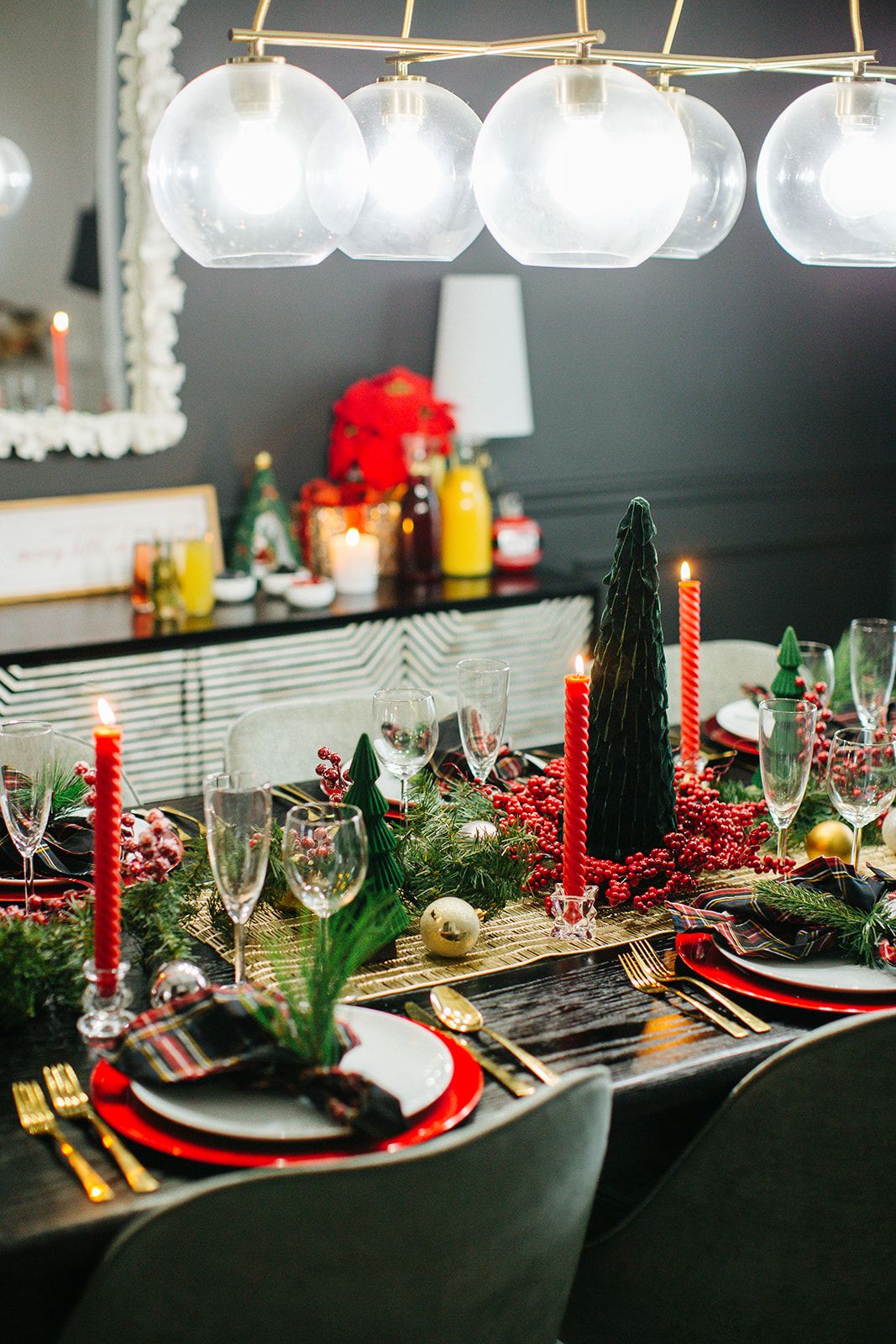
A Cohesive Color Palette. Choose two or three colors and commit to them across every element — linens, florals, candles, tableware. For a classic holiday feel, deep greens, cream, and gold read timeless. For something more modern, midnight blue, brass, and ivory feel fresh and unexpected.
Layered Texture. A tablecloth or runner as the base, layered with chargers, linen napkins, and textured dishware. For this dinner, I used a gold woven fabric runner — the texture added depth without competing with the greenery and candles running the length of the table.
A Clear Focal Point. Designate one central element that anchors the table visually — a floral arrangement, a cluster of candles, a themed decoration. For this gathering, the centerpiece was a wreath circled with holly berries, flanked by candles and festive jingle bells. It was simple, seasonal, and completely intentional.
Seasonal Elements. Pinecones, evergreen branches, holly berries, pomegranates, cranberries — natural materials make a holiday table feel grounded and organic rather than manufactured. Tuck them throughout the runner rather than clustering them only at the center.
A Personal Touch at Each Setting. A small gift tag tied to the napkin, a name card written in calligraphy, a single evergreen sprig tucked into the napkin fold. The detail does not have to be elaborate — it just has to signal that you thought of each person specifically.
For more holiday tablescape inspiration, check out my holiday tablescape guide for the ornament exchange — many of the same principles apply.
5. Choose a Signature Holiday Drink
A signature drink is not optional — it is the first impression of the evening. The moment guests walk in and are handed something beautiful and seasonal, the energy shifts. The night officially begins. Whatever you choose, it should feel completely aligned with the season and be easy to batch in advance so you are not behind the bar when guests arrive.
Two Directions That Work for This Gathering
Cream-Based and Cozy: The Gingerbread Martini. Rich, warming, and festive without being heavy. Vodka or rum base with gingerbread syrup, cream, and a cinnamon sugar rim. Batch the base the night before and shake to order, or set it up as a self-serve station.
Bright and Festive: The Cranberry Moscow Mule. Vodka, cranberry juice, fresh lime, and ginger beer over ice in a copper mug. The color is stunning on the table and the flavors are unmistakably seasonal. Easy to batch in a pitcher and pour to order.
In either case, always have a non-alcoholic option available — a cranberry sparkling water with a rosemary garnish is effortless and photographs beautifully alongside the cocktail station.
Get the full recipes: holiday mimosa bar | peppermint martini
6. Plan a Holiday Menu That Feels Elevated and Intentional
The best holiday menus are rarely the most complicated ones — they are the most intentional ones. For a friends’ holiday dinner in the first week of December, I always build around a clear arc: something elegant to start, something to gather around, a salad that bridges the gap, a showstopper entrée, and a dessert that keeps everyone at the table just a little longer. What I want to avoid above all else is anything that feels like a Thanksgiving repeat. We just came off of that table. This dinner should feel like a fresh chapter — seasonally distinct, a little more sophisticated, and completely its own.
Build-Ahead Tips for a Stress-Free Dinner
Furthermore, I always recommend building as much of this menu ahead as possible. The appetizers should be assembled before guests arrive. The rigatoni sauce can be made earlier in the day. The cheesecake board is built and chilled. When guests walk in, you are present — not in the kitchen. That is what elevated home hosting actually looks like. In the final analysis, the most memorable holiday dinners are not the ones where the host was busy — they are the ones where the host was fully in the room.
— APPETIZERS —
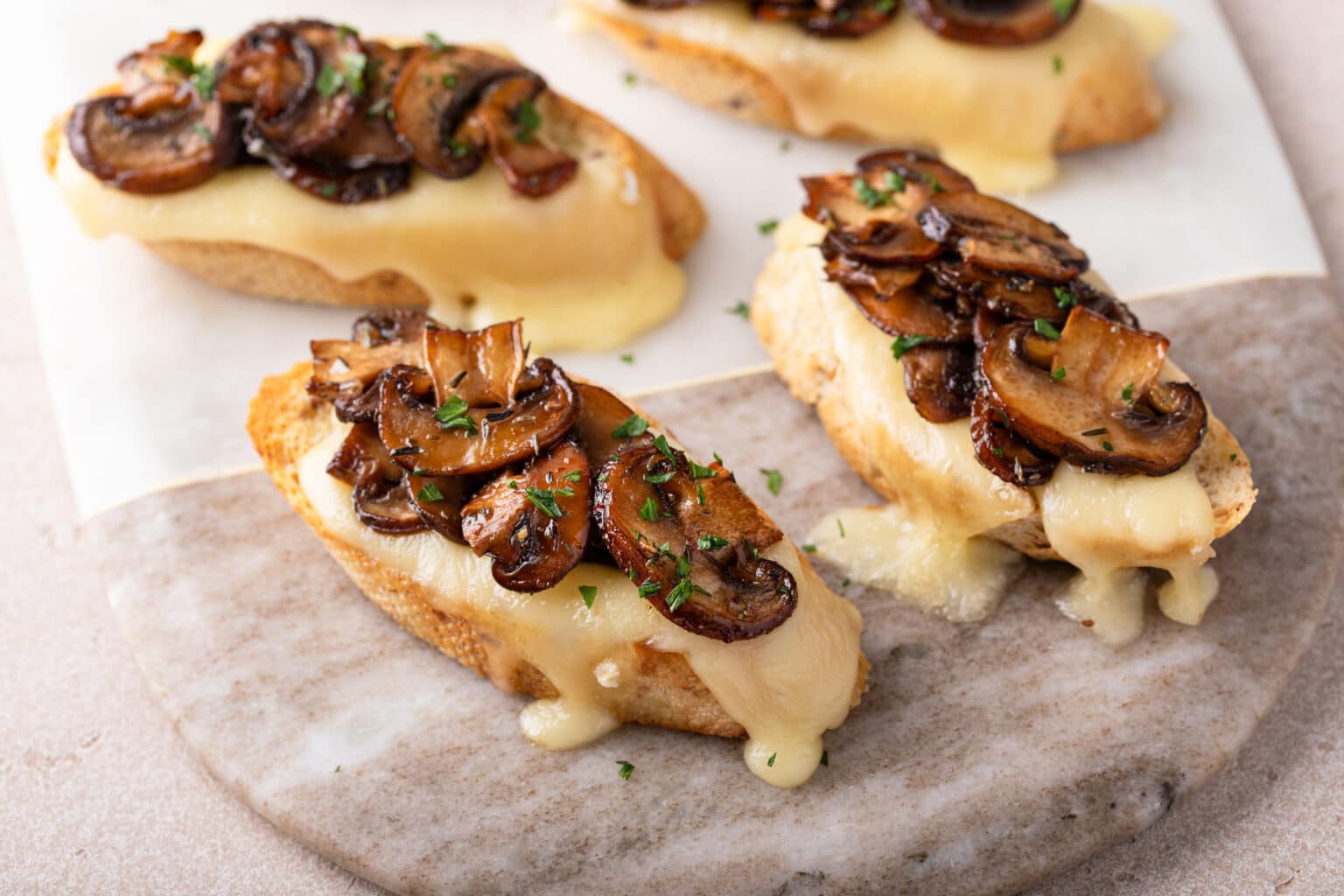
Earthy, creamy, and completely make-ahead — this is the crostini I return to every holiday season without hesitation. Sautéed mushrooms and melted brie layered on a crisp toasted baguette slice is one of those bites that feels quietly impressive without asking anything complicated of the host. What makes it such a natural fit for this menu specifically is how it bridges the season: the mushrooms bring a deep, woodsy warmth that feels unmistakably December, while the brie keeps it from feeling too heavy before the rest of the meal.
The mushrooms can be cooked the day before, the bread sliced and toasted earlier in the afternoon, and all you are doing when guests arrive is assembling and warming. It disappears quickly, it photographs beautifully, and it sets the right tone from the first bite.
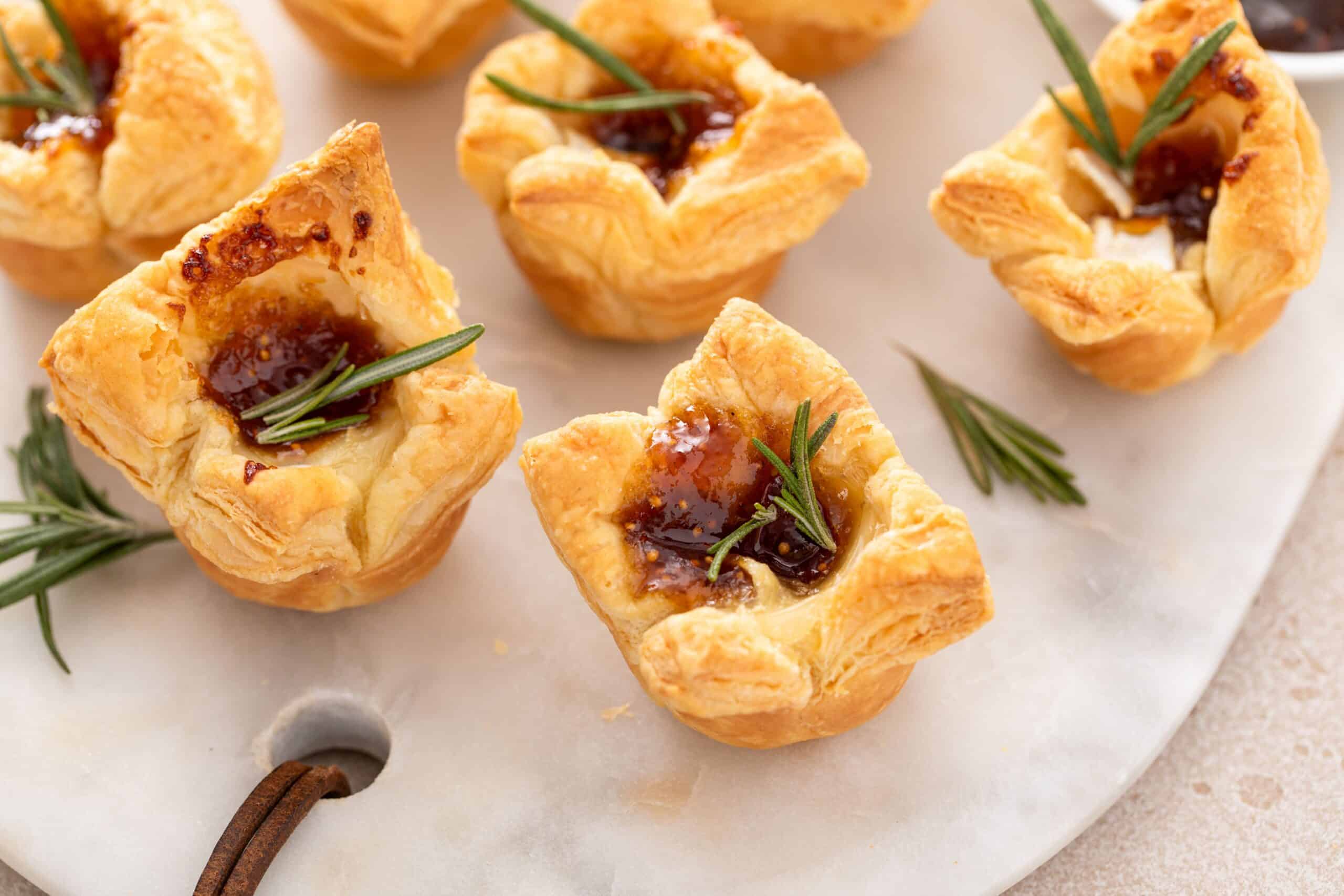
Flaky pastry, creamy brie, and sweet fig jam in one composed, two-bite package — these little bites feel genuinely gourmet without requiring anything complicated from the host. Moreover, they pair beautifully with the Mushroom & Brie Crostini because while both feature brie, the flavor profiles are entirely different: the crostini is savory and earthy, the fig bites are sweet and rich. Together they give guests contrast and variety right from the start. Make them in advance, warm just before guests arrive, and place them on a simple slate or wooden board alongside the crostini. The spread looks intentional, abundant, and completely holiday.
— BOARD —
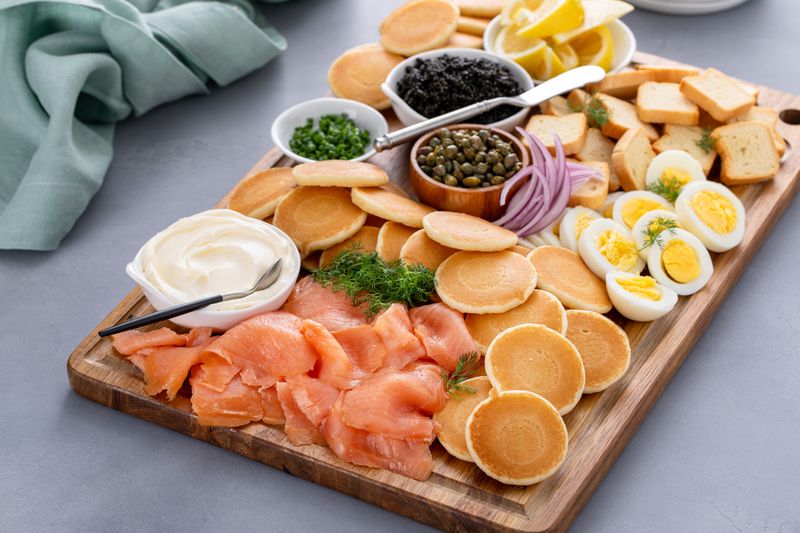
A caviar board at a holiday dinner instantly communicates that this evening is not ordinary — and that is exactly the message this gathering is meant to send. It is one of the most visually striking things you can place on a table, and it gives guests something to genuinely gather around and interact with during that first thirty minutes before everyone is seated. In particular, it works so well at this dinner because it fills the transition between arrival and the seated meal without requiring any hosting effort once it is styled. Place it on a dark slate or marble board with blinis, crème fraîche, lemon wedges, chives, and a few elegant crackers, set it out as guests pour their first drink, and let it do its own work. It elevates the room simply by being there.
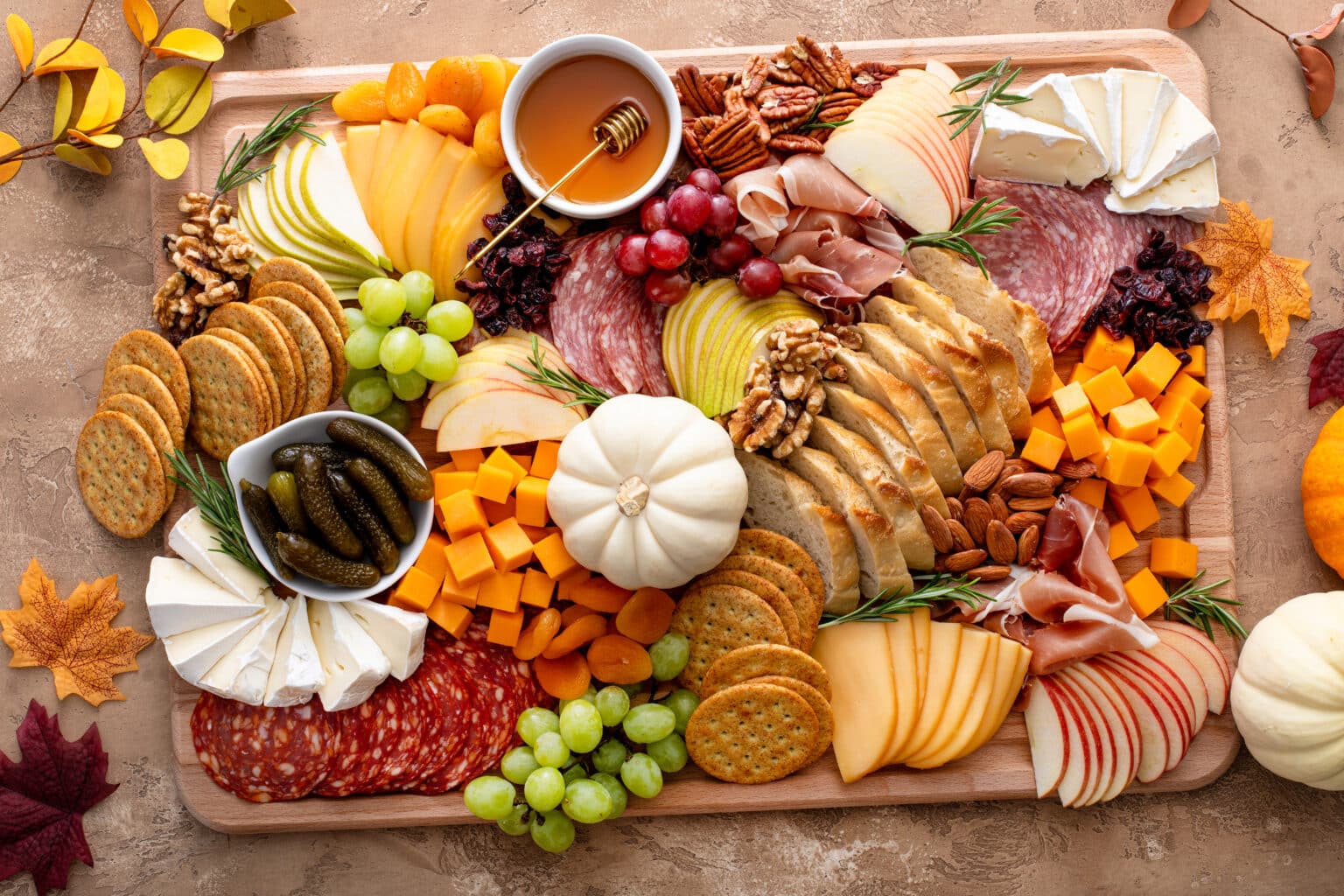
My Signature Charcuterie Board
A curated charcuterie board is one of the most versatile starters you can place on a holiday table — it works as a grazing option during arrivals, it photographs beautifully, and it gives guests something to gather around. Build it with seasonal elements: aged cheddars, fig jam, candied pecans, pomegranate seeds, and a variety of crackers. Set it up before guests arrive and let it anchor the small bites section of the meal.
— SALAD —
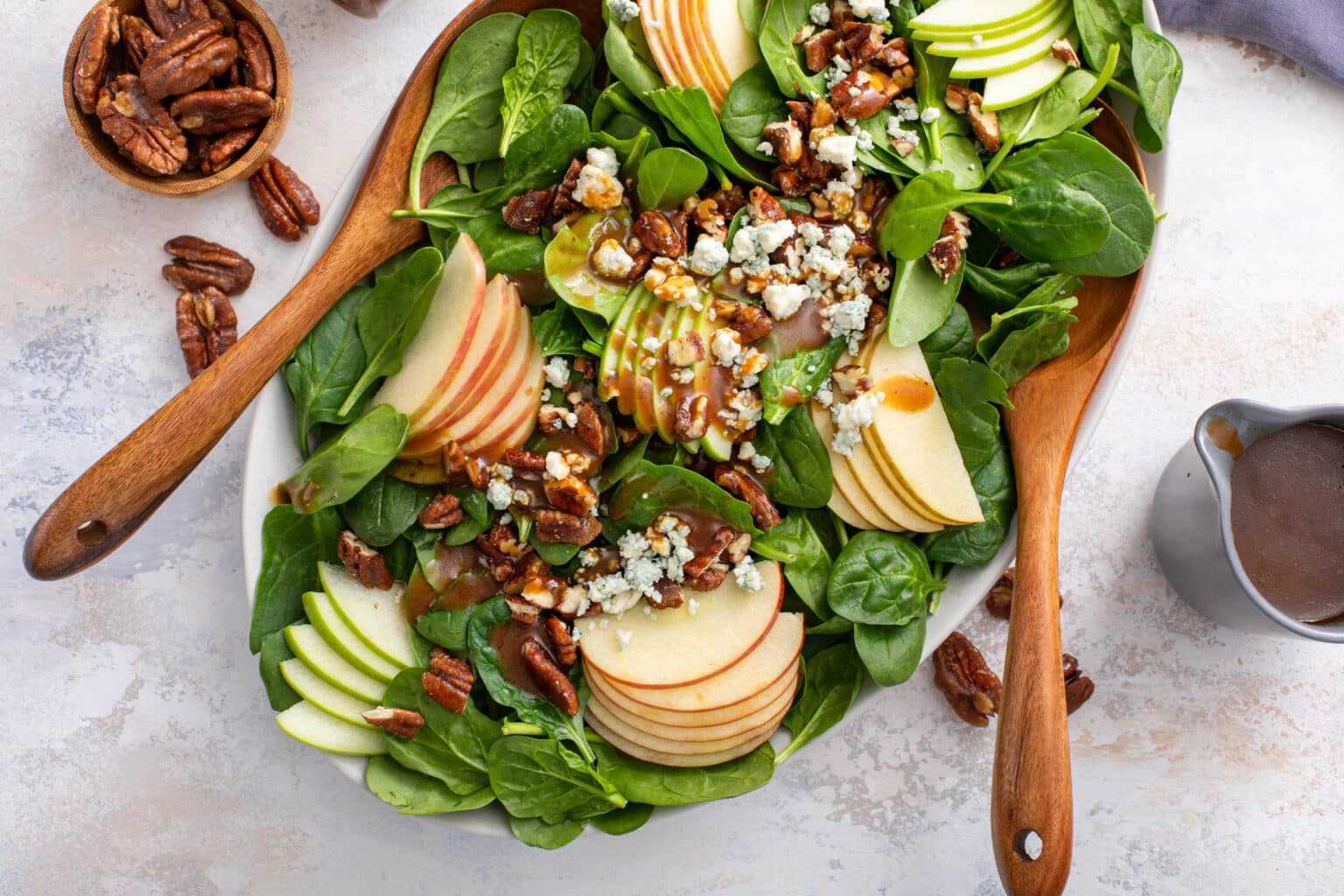
A winter salad is the quiet hero of this menu — and this one earns its place at the holiday table in a way a basic green salad simply cannot. It is fresh without feeling out of season, visually beautiful with its seasonal ingredients, and serves a very specific purpose within the arc of this dinner: it gives guests a moment of lightness and brightness between the richness of the appetizers and the deep, creamy warmth of the rigatoni. Without it, the menu would move from heavy to heavier. With it, the meal breathes.
Dress it just before serving so the greens stay crisp, and bring it to the table just as the last appetizer plates are being cleared. The contrast in flavor and texture is exactly what the menu needs at that moment.
— ENTRÉE —
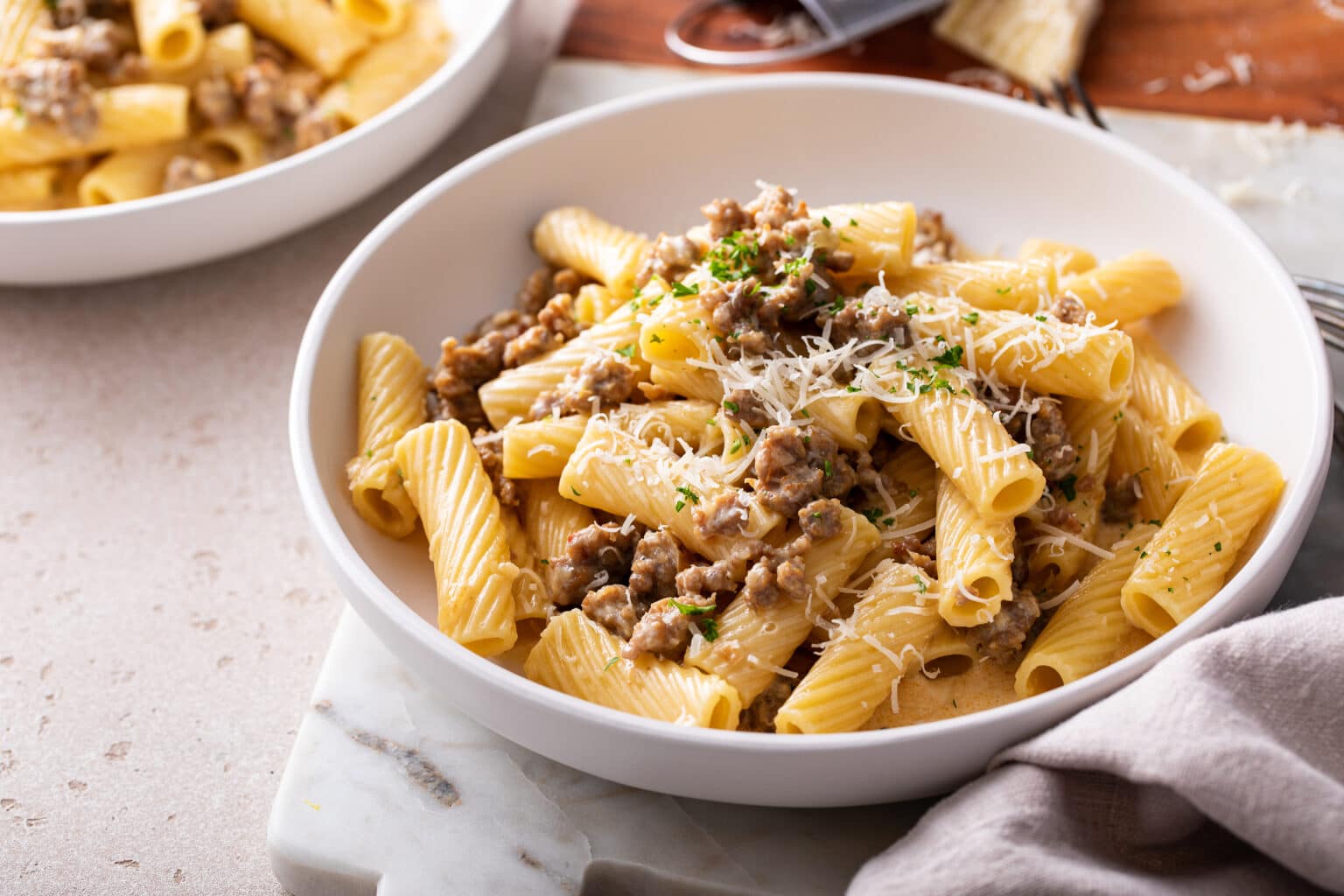
This is the dish that makes the whole table pause — and it is the reason this menu works so well as a cohesive whole. Rigatoni with Italian sausage in a rich, creamy parmesan sauce is restaurant-quality comfort food made in the comfort of your own home, and it is exactly what a December dinner with your closest friends should feel like. After the elegance of the caviar board and the brightness of the winter salad, the rigatoni lands as a warm, indulgent reward — the moment the meal becomes genuinely celebratory.
The sauce comes together in under thirty minutes, which means you can make it earlier in the day and reheat gently before serving. For a dinner of twelve to thirteen guests, double the recipe and serve family-style in a large, beautiful pasta bowl at the center of the table. It becomes part of the tablescape as much as the meal itself — and there is something deeply convivial about a table where everyone reaches in together.
— DESSERT —
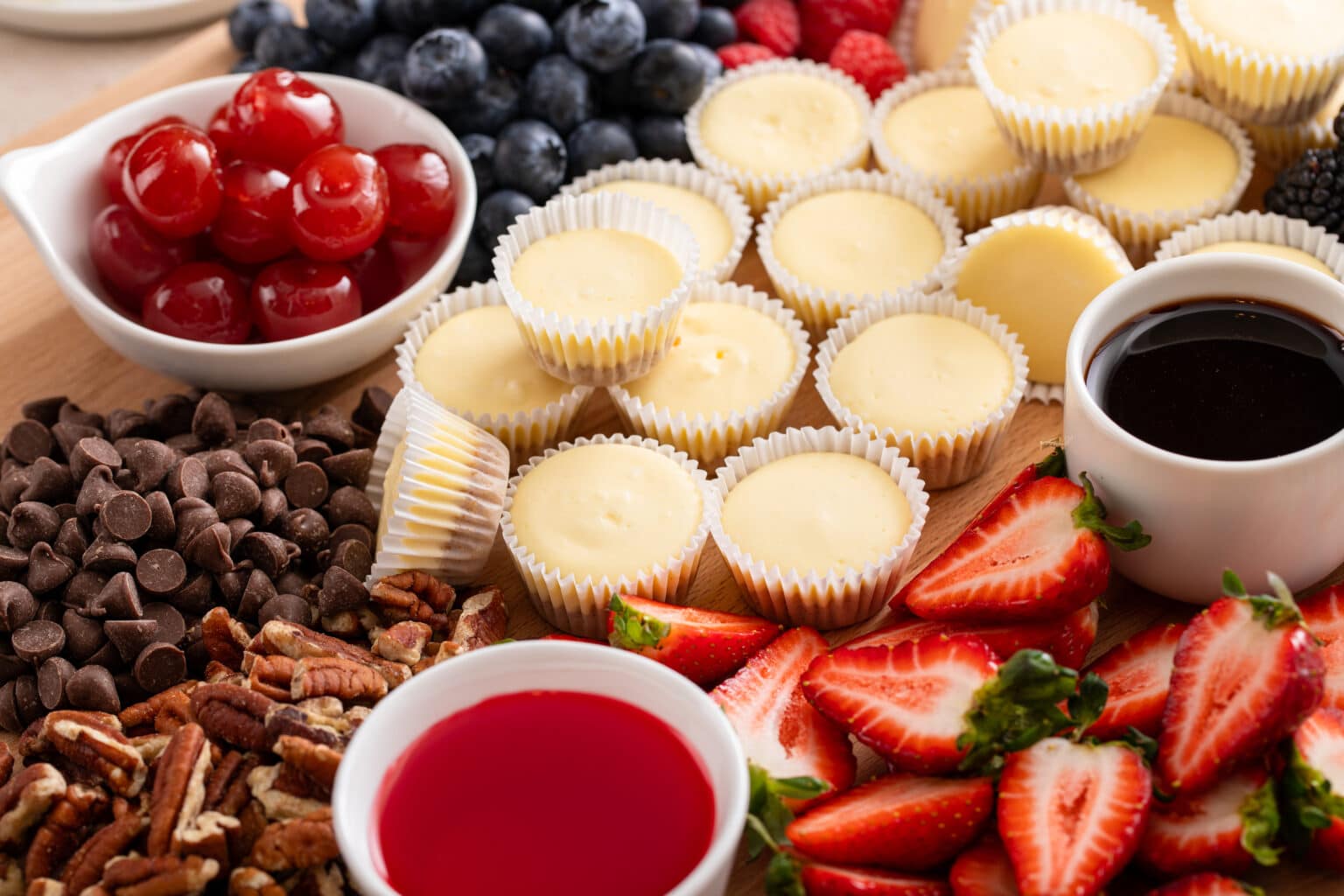
Dessert at a holiday dinner should feel like the natural finale it is — not an afterthought, and not something that requires the host to disappear into the kitchen again. The mini cheesecake board delivers exactly that. A stunning, abundant display of bite-sized cheesecakes in different flavors and toppings, it gives guests choices, encourages lingering at the table long after the main course is cleared, and photographs beautifully as the evening winds down. What’s more, it complements the rigatoni perfectly — after a rich, savory pasta, guests want something sweet but not overwhelming, something they can pick at slowly while the conversation continues. The variety of the board means no one has to commit to one flavor, which makes it as social as it is delicious.
Build it entirely in advance, keep it chilled, and bring it to the table as the final centerpiece of the evening. Place it where the caviar board was earlier in the night — the symmetry is intentional and elegant.
— COCKTAILS — Choose Your Direction —
The signature drink is not optional — it is the first impression of the evening. Before guests see the tablescape up close, before they take their first bite, they have a drink in their hand. That drink should feel completely aligned with the season, look beautiful in the room, and be ready to pour the moment the first guest walks through the door. For this dinner, I offer two directions: something bright and vodka-forward, or something celebratory and champagne-based. Both batch beautifully in advance, both photograph well on the table, and together they give every guest exactly what they are in the mood for.
The Bright & Festive Choice: Cranberry Moscow Mule
Vodka, cranberry juice, fresh lime, and ginger beer served over ice in a copper mug — the Cranberry Moscow Mule is the cocktail that looks like December and tastes exactly like it should. The deep cranberry red is stunning against a holiday tablescape, the copper mug adds a styling element to the bar station that photographs beautifully, and the ginger bite keeps it from being too sweet. It complements this menu particularly well because it is bright and effervescent — a counterpoint to the richness of the rigatoni and the creaminess of the cheesecake board. Batch the base in a large pitcher the afternoon of the dinner, add the ginger beer to order when guests pour themselves a glass, and garnish with a fresh rosemary sprig and a few sugared cranberries for a presentation that feels completely considered.
The Celebratory Choice: Holiday Champagne Bar
If there is one thing that signals celebration the moment guests walk into a room, it is the sight of a champagne bar. The Holiday Champagne Bar is a self-serve station built around a chilled bottle of Prosecco or champagne, two or three seasonal juice options — cranberry, pomegranate, blood orange — and a garnish station with fresh rosemary sprigs, sugared cranberries, and citrus wheels. What makes it such a natural fit for this particular dinner is the interactivity: guests arrive, pour themselves something beautiful, and immediately feel like the evening has begun. It requires almost no hosting effort once it is set up, it looks stunning as a styled vignette in the room, and it gives guests the freedom to build their own drink exactly the way they like it.
Moreover, champagne alongside a caviar board is one of the most classically elegant pairings in entertaining — the two anchor each end of the savory portion of the meal in a way that feels completely cohesive and intentional.
The Non-Alcoholic Option
Always offer a non-alcoholic choice that feels as considered as the cocktail options — not a bottle of sparkling water placed on a side table as an afterthought. A sparkling cranberry juice with a rosemary garnish in a champagne flute, or a spiced apple cider served warm in a small mug, signals that every guest at the table was thought of. Present it on the bar station alongside the other options with the same care and styling. Every glass in the room should feel intentional.
Hosting Tip: Ask about dietary restrictions before the menu is finalized — not the day before the dinner. A quick line in the invitation does the work for you. This menu is naturally flexible: the rigatoni can be made with a plant-based sausage alternative for guests who do not eat meat, and both the caviar board and the cheesecake board can be enjoyed by almost everyone at the table. The more thoughtfully you plan ahead, the more fully present you get to be on the night itself. And that presence — the host who is relaxed, unhurried, and genuinely in the room — is the detail guests remember most.
7. Set the Ambience — Lighting, Music, Scent
Ambience is the invisible host. It greets guests before you do, holds the energy of the room throughout the evening, and stays in their sensory memory long after the night ends. For a holiday dinner at home, you want to layer three elements: lighting, music, and scent.
Lighting. Swap overhead lighting for candles and table lamps wherever possible. Candlelight at a holiday dinner table is transformative — it softens everything and makes the room feel genuinely warm rather than simply lit. Use taper candles on the table, pillar candles on sideboards, and battery-operated tea lights in areas where open flame isn’t practical.
Music. Set a playlist before guests arrive and keep it at a conversational level — audible but never competing. I recommend classic holiday jazz, instrumental holiday covers, or a curated Spotify holiday playlist in the vein of Norah Jones or Michael Bublé. The music should feel like it belongs in the room, not like it was turned on as an afterthought.
Scent. Choose one seasonal scent for the space — pine, fir, cinnamon, clove, or vanilla — and use it consistently. A candle in the entryway, one on the table if it does not compete with food aromas, and a reed diffuser in the powder room. The moment guests walk in and smell something warm and seasonal, the experience has already begun.
8. The Details That Make It Unforgettable
The details guests remember most are almost never the most expensive ones. They are the most personal ones — the small signals that a host thought of them specifically, not just the group generally. With this in mind, here are the details I return to every year for this dinner.
A Welcome Moment. Greet each guest at the door with their cocktail already in hand. That single gesture communicates care immediately and removes any awkwardness of arrival.
A Toast. Take two minutes mid-evening to acknowledge why you gathered — what this group means to you, what you are grateful for going into the season. It is the moment that shifts the dinner from a nice night out to a memory.
A Takeaway Gift. A small favor at each seat — a holiday candle, a jar of local honey, a single wrapped ornament — elevates the experience and gives guests something to carry the evening home with them.
A Photo Moment. Set up one intentional photo area — a full table shot before guests are seated, or a moment near the decorated entryway. These are the images that end up on Instagram and Pinterest, and they are the ones that tell the story of the gathering.
For more detail inspiration, see my holiday ornament exchange — every detail from that evening translated beautifully.
9. A Simple Hosting Timeline for the Evening
One of the most valuable things a host can do is map the arc of the evening in advance. Not to rigidly schedule every moment, but to understand the natural flow — and let it unfold with intention rather than improvisation.
Sample Event Flow
Arrival + Welcome Drink (30 minutes). Guests arrive and are handed their signature cocktail. Background music is on. No formal seating yet — let the room fill organically while appetizers are accessible.
Seated Dinner (60–75 minutes). Guests move to assigned seats. Starters or boards are already on the table. Conversation flows through the meal — this is the heart of the evening.
Toast + Meaningful Moment (10 minutes). A brief toast from the host. If you are doing an ornament exchange or gift element, this is the natural transition point.
Ornament Exchange or Gift Activity (20–30 minutes). Festive, light, and engaging. Guests love the theatrics of a steal-the-gift format.
Dessert + Lingering (30–45 minutes). Dessert is served as conversation continues. This is the unhurried part of the evening — resist the urge to rush it.
Takeaway Gifts + Farewells. Guests collect their favor at the door. A final moment of connection and warmth on the way out.
In total, plan for two and a half to three hours. The pauses — the lingering, the second glass, the conversations that extend past what you planned — are what guests actually remember.
10. Host It Your Way — The How to Host Workshop
What I have described in this guide is the foundation of what I teach in my How to Host workshops — the real, hands-on experience of learning to set a table, build a menu, and create an evening that your guests will talk about. If you want to take these skills further and apply them to your own gatherings, I would love to have you.
How to Host is my live entertaining workshop experience, available in Atlanta, Nashville, and Savannah. Whether you are planning a corporate event, a bachelorette weekend, or a private dinner party, How to Host gives you the tools, the confidence, and the tablescaping skills to create moments that feel intentional, elevated, and entirely your own.
→ Explore How to Host at eatingwitherica.com/the-experience/
More Hosting Inspiration
How to Host a Holiday Ornament Exchange
Five tips to plan a memorable ornament exchange your guests will talk about all season.
How to Host a Baby in Bloom Baby Shower
The complete spring baby shower guide — from tablescape and florals to menu, favors, and hosting flow.
Holiday Ornament Exchange at Twisted Soul
Inside our EWE Supper Club ornament exchange — the tablescape, the menu, and the moments.
Elevated Holiday Hosting eBook — download your copy and take your holiday hosting to the next level.
