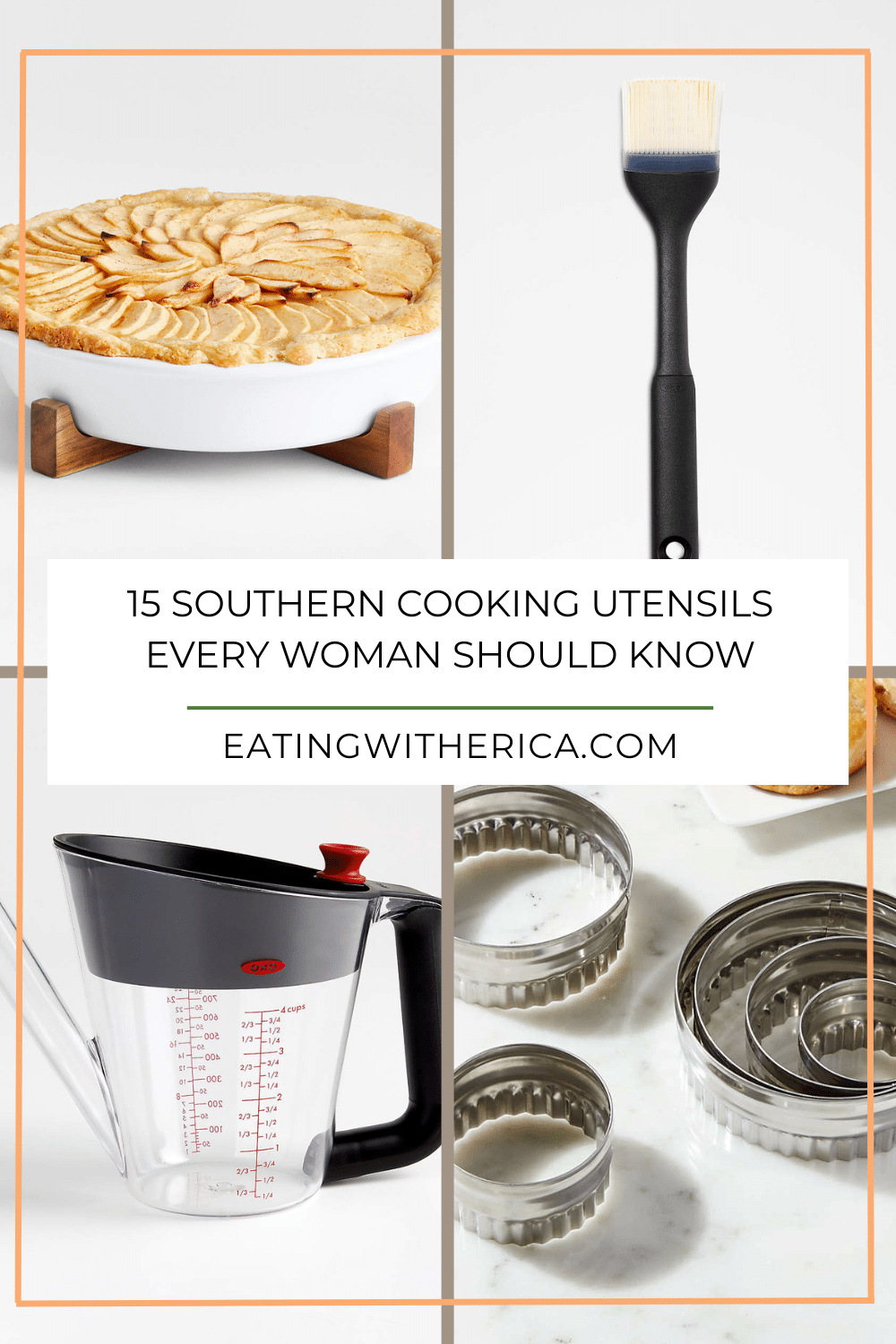

15 Southern Cooking Utensils Worth Having in Your Kitchen
This post contains affiliate links. I only share products I personally use and genuinely love. As an Amazon Associate, I earn from qualifying purchases.
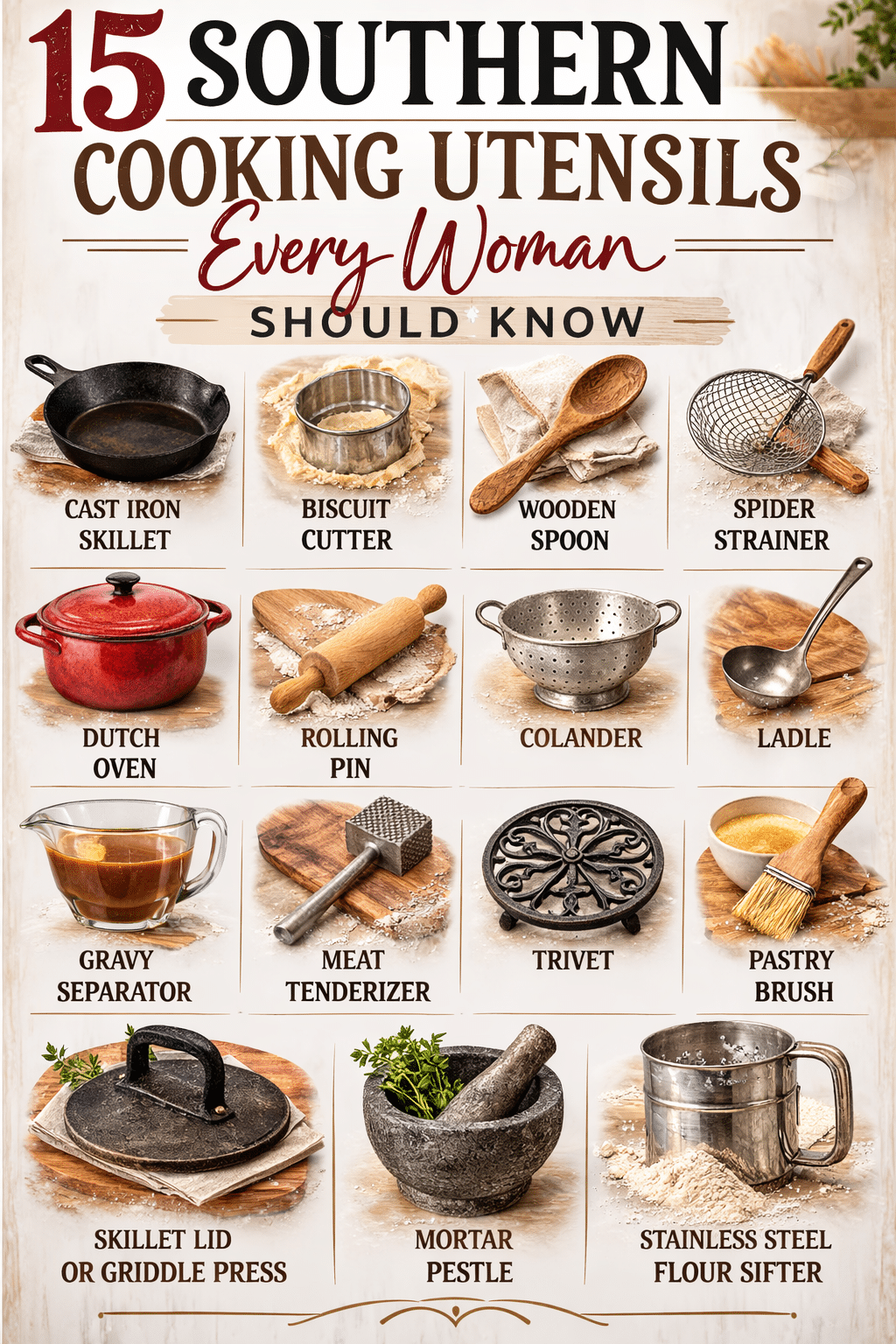
A Southern kitchen doesn’t run on gadgets. It runs on a handful of good, sturdy tools that get used every single week — for biscuits on Sunday morning, a pot of greens for supper, and a skillet of cornbread that goes straight to the table. With this in mind, I’ve pared the list down to the 15 utensils that earn their space, what each one actually does, what to look for when you buy it, and how to care for it so it lasts. In essence, buy these once, buy them well, and you’ll cook with them for years.
01-Cast Iron Skillet
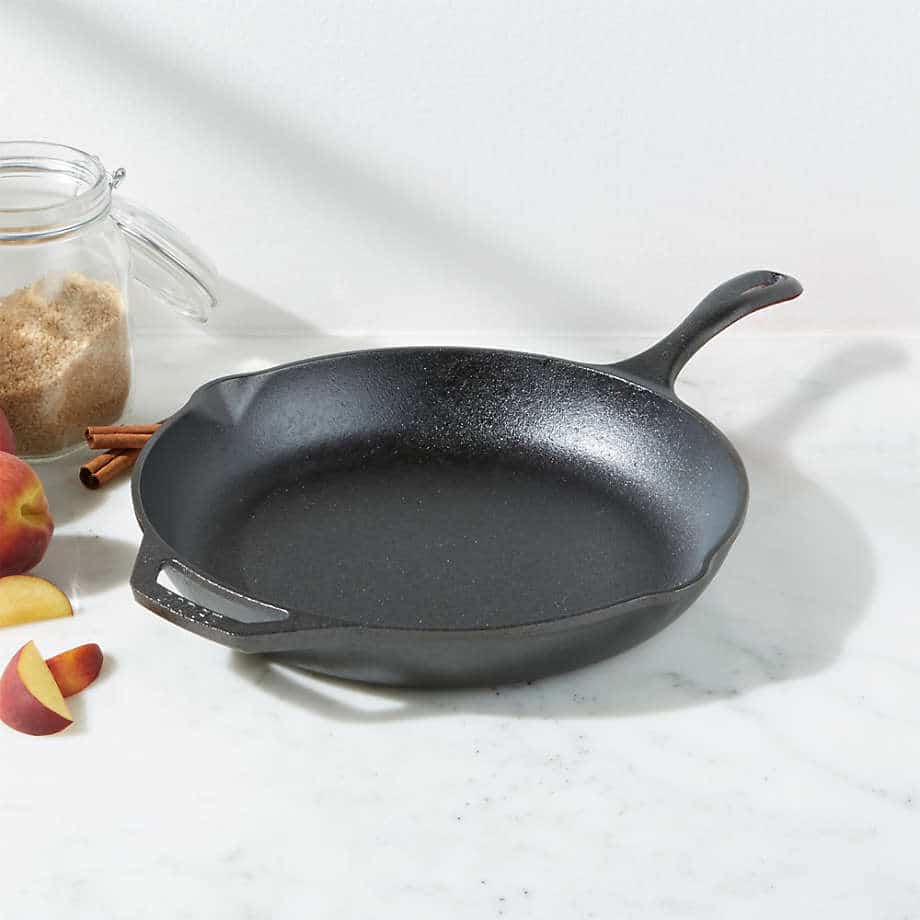
What it does: Holds heat steadily, so it sears, fries and bakes evenly — from fried chicken to cornbread to a pan of roasted vegetables for dinner.
What to look for: A 10- or 12-inch skillet is the most useful size for a family. Pre-seasoned is the easiest place to start, and a helper handle on the opposite side makes a heavy, full pan much safer to lift.
Care: Wash with hot water and a little dish soap, dry it completely over a low burner, then rub in a thin layer of oil while it’s warm. Never let it soak or go in the dishwasher — that is what causes rust.
02-Biscuit Cutter
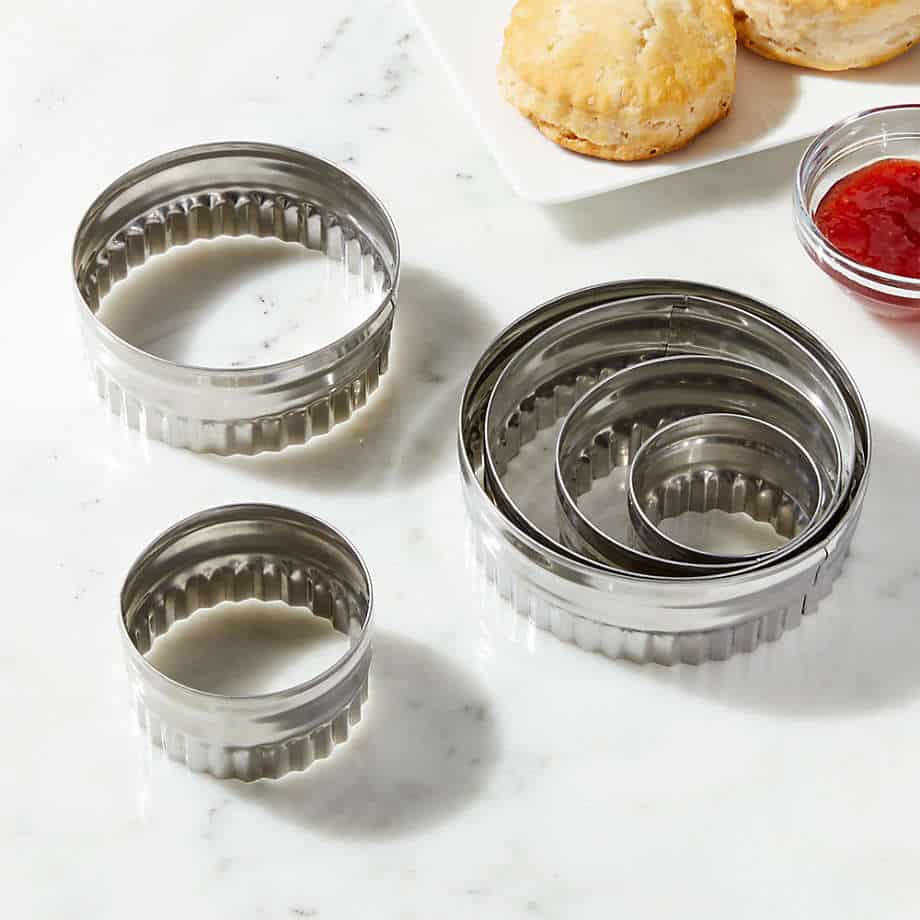
What it does: Cuts clean, even rounds so biscuits rise tall and bake at the same rate.
What to look for: A metal cutter with a sharp edge, about 2 to 2½ inches across. Moreover, a set of graduated sizes covers biscuits, cookies and tea sandwiches.
Tip: Dip the cutter in flour, press straight down and lift — don’t twist. Twisting seals the edges, and sealed edges keep a biscuit from rising.
03-Wooden Spoon
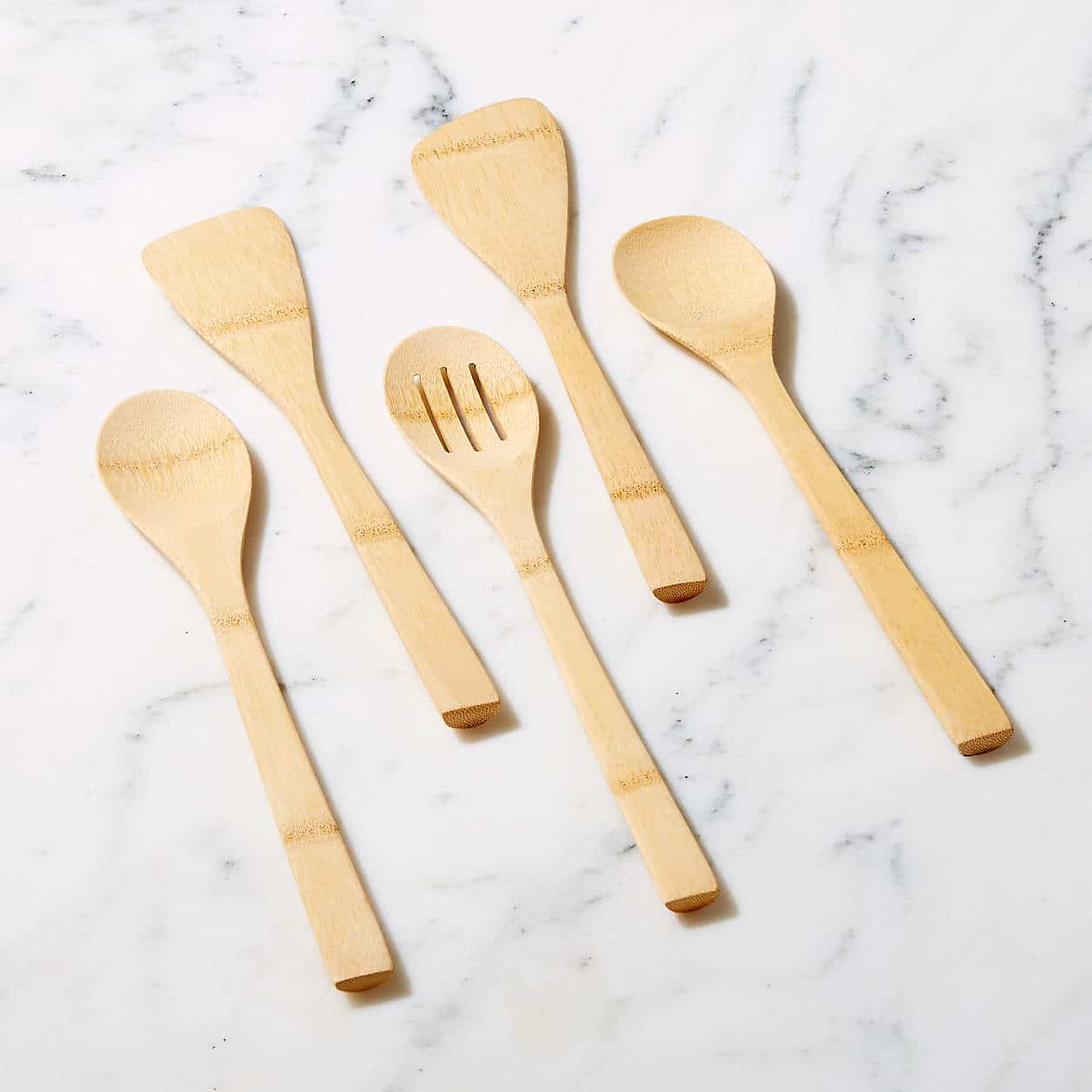
What it does: Stirs thick roux, gravy, grits and jam without scratching your pots, and the handle stays cool.
What to look for: A dense hardwood such as maple, beech, cherry or olive wood. Equally important, a spoon with a flat front edge reaches into the corners of the pan, which is exactly what you want when a roux can’t be allowed to scorch.
Care: Hand wash, dry right away, and rub with food-safe mineral oil every so often so the wood doesn’t crack.
04-Skimmer or Spider Strainer

What it does: Lifts fried chicken, fish, hushpuppies or boiled vegetables out of hot oil or water and lets the liquid drain back into the pot.
What to look for: A wide stainless-steel wire basket (5 to 6 inches) and a long handle, so your hand stays well back from hot oil.
Tip: Hold each batch over the pot for a few seconds before moving it to a wire rack. Food set on a rack instead of paper towels stays crisp on the bottom.

Hunting for a fresh bread?
From golden, just-out-of-the-oven loaves to cozy kitchens where you can learn the craft yourself, there’s something truly special about experiencing baking the old-fashioned way. Whether you’re craving warm focaccia, artisan sourdough, or want to roll up your sleeves in a class, these local gems deliver comfort in every bite.
05-Dutch Oven

What it does: Heavy walls and a tight lid make it the pot for low-and-slow cooking — red beans, pot roast, gumbo, braised greens, even bread.
What to look for: Enameled cast iron in the 5½- to 7-quart range feeds a family with leftovers. Check that the lid knob is oven-safe at high temperatures; some knobs are rated lower than the pot itself.
Care: Use wooden or silicone utensils to protect the enamel, and let the pot cool before washing — cold water on a hot pot can crack the finish.
06-Rolling Pin

What it does: Rolls pie crust, biscuit dough and pastry to an even thickness so everything bakes evenly.
What to look for: A French-style pin (a single tapered piece of wood with no handles) gives you the most control and the best feel for the dough. A straight, handle-free wooden pin is a good alternative.
Tip: Roll from the center outward and give the dough a quarter turn every few strokes. If it starts to stick or tear, it’s too warm — chill it for 10 minutes.
07-Colander

What it does: Drains pasta, potatoes, beans and freshly washed greens.
What to look for: Stainless steel with a footed base so it stands on its own in the sink, about 5 quarts, with small holes so rice and small greens don’t slip through.
Tip: For collards and other greens, wash them in a sink full of cool water, then lift the leaves out so the grit stays at the bottom. Repeat until the water is clear, then drain them in the colander.
08-Ladle

What it does: Serves soups, stews, gumbo and gravy, and portions batter for pancakes.
What to look for: One-piece stainless steel (no seam where food can hide), a hooked handle that rests on the pot’s rim, and a bowl that holds about 4 to 8 ounces. Many ladles are marked inside, which makes them a handy measuring tool as well.
09-Gravy Separator

What it does: Separates the fat from pan drippings so your gravy is rich, not greasy.
What to look for: A heat-safe cup with about a 4-cup capacity. Because fat rises to the top, the spout or bottom-release valve pours off the flavorful juices underneath and leaves the fat behind.
Tip: Let the drippings sit in the separator for a minute or two before pouring so the fat has time to rise.
10-Meat Tenderizer (Mallet)

What it does: Pounds chicken, pork and cube steak to an even thickness so they cook through at the same time, and breaks down tougher cuts.
What to look for: A two-sided mallet — the flat side is for even thickness, the textured side is for tenderizing — with a comfortable, weighted handle.
Tip: Pound the meat between two sheets of plastic wrap. It keeps the counter clean and stops the meat from tearing.

Explore 7 Atlanta Cooking Classes Every Food Lover Should Try.
If you enjoyed learning about 15 Southern Cooking Utensils Every Woman Should Know, try exploring the Atlanta cooking classes. It’s a great way to take your culinary skills to the next level, discover new techniques, and get inspired by hands-on experiences in the kitchen. ✨
11-Trivet

What it does: Protects your table and countertops from hot skillets, casseroles and Dutch ovens, so dishes can go straight from oven to table.
What to look for: A trivet large enough for the base of your Dutch oven. Cast iron and wood look beautiful on a set table; silicone is lighter and doubles as a pot holder.
12-Pastry Brush

What it does: Brushes melted butter on biscuit tops, egg wash on pie crust, and glaze on ham or rolls.
What to look for: Natural bristles hold more liquid and lay down a delicate, even coat. On the other hand, silicone is easier to clean and never sheds a bristle on your pie. Many cooks keep one of each.
13-Skillet Lid or Griddle Press


What it does: A lid traps heat and steam so food cooks through evenly and grease doesn’t spatter. A cast-iron press keeps bacon flat, sears smash burgers and presses grilled sandwiches.
What to look for: A lid sized exactly to your skillet, and a heavy cast-iron press with a handle that stays cool.
Tip: Warm the press in the pan or oven first so it cooks from the top as well as the bottom.
14-Mortar and Pestle

What it does: Crushes whole spices, herbs and garlic, releasing far more flavor than anything pre-ground.
What to look for: Heavy granite with an unpolished inside so the ingredients grip instead of sliding around; about a 2-cup bowl is a good working size.
Tip: Toast whole spices in a dry skillet for a minute before crushing them. For garlic paste, add a pinch of coarse salt — it acts like sandpaper.
15-Stainless Steel Flour Sifter

What it does: Breaks up lumps and lightens flour so cakes and pastries come out soft and fine-crumbed.
What to look for: Stainless steel with a fine mesh and an easy-turn crank or squeeze handle.
Tip: Read the recipe closely. “1 cup sifted flour” means sift first, then measure; “1 cup flour, sifted” means measure first, then sift. As a result, the amount of flour is different, and so is the cake.
Care: Tap it out after each use instead of washing it. If you do wash it, dry it completely so the mesh doesn’t rust.
Final Thoughts

A well-stocked kitchen isn’t about owning every gadget — it’s about a few dependable tools you reach for without thinking. All things considered, if you’re building your kitchen from scratch, start with the cast iron skillet, the Dutch oven and a good wooden spoon, and add the rest as you cook. Take care of them, and they’ll be on the stove long after the trends have passed.
READ NOW, SAVE LATER!