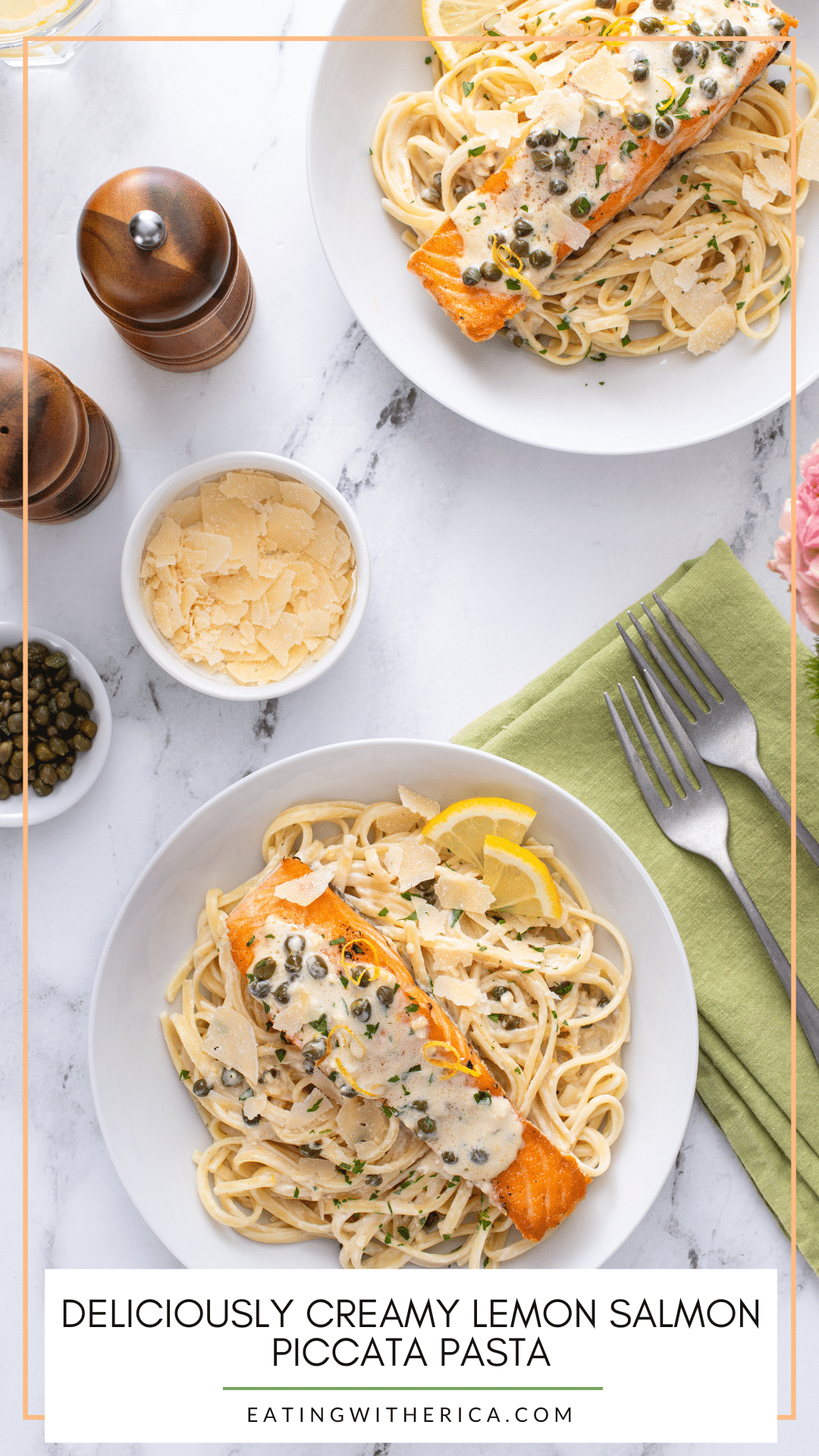

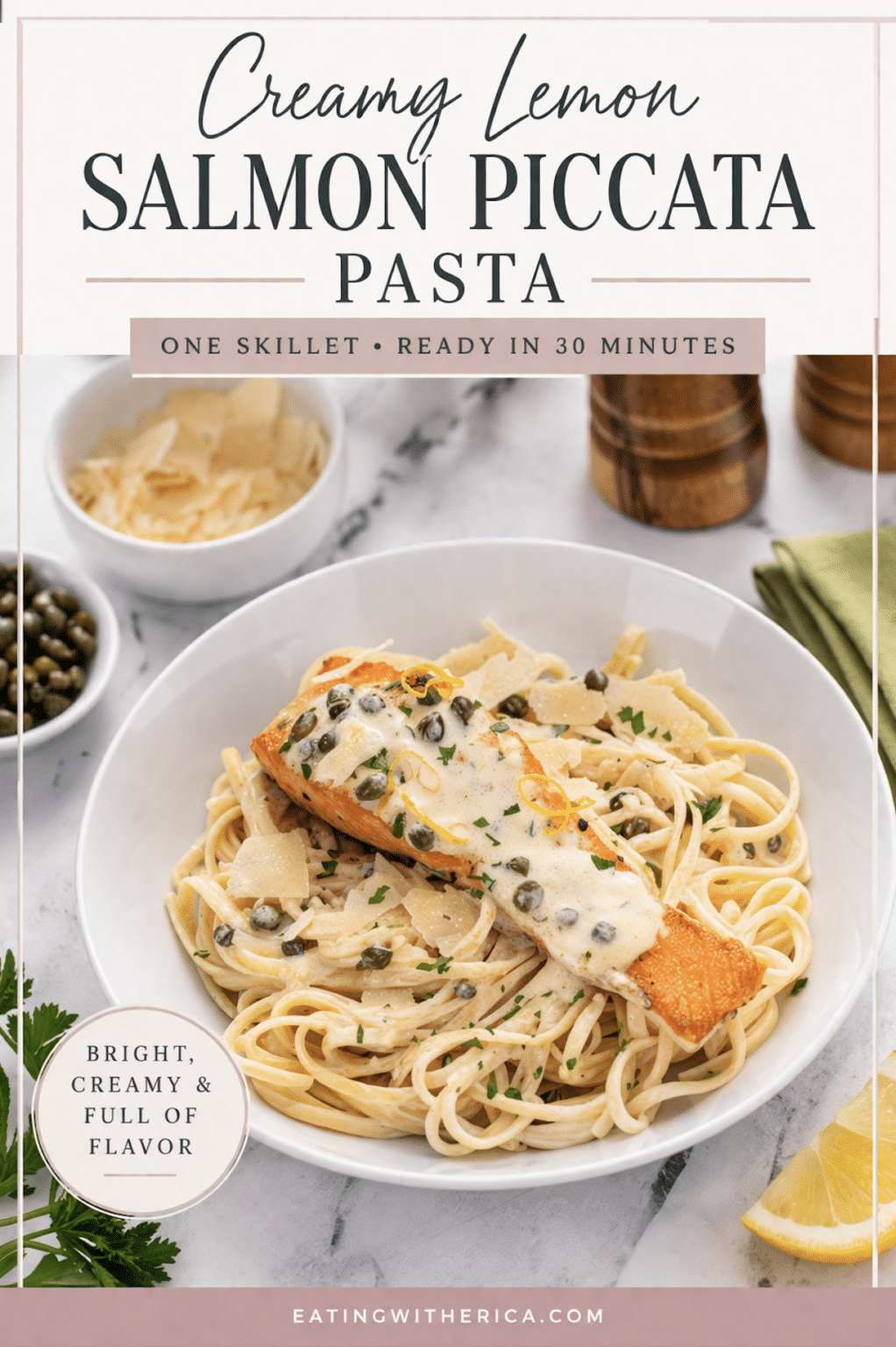
Creamy Lemon Salmon Piccata Pasta
This Creamy Lemon Salmon Piccata Pasta is one of those recipes I return to often — bright, balanced, and effortlessly refined, yet made in one skillet in under 30 minutes. As someone who cooks salmon regularly, this dish stands out because it delivers both comfort and elegance in a way that very few weeknight recipes manage to do. The richness of the cream, the acidity of fresh lemon, and the briny pop of capers come together in one sauce. It feels layered and intentional rather than heavy. Moreover, it works for a quiet night at home or a planned dinner party, much like my smoked salmon and caviar crostini or a white sausage tortellini soup.
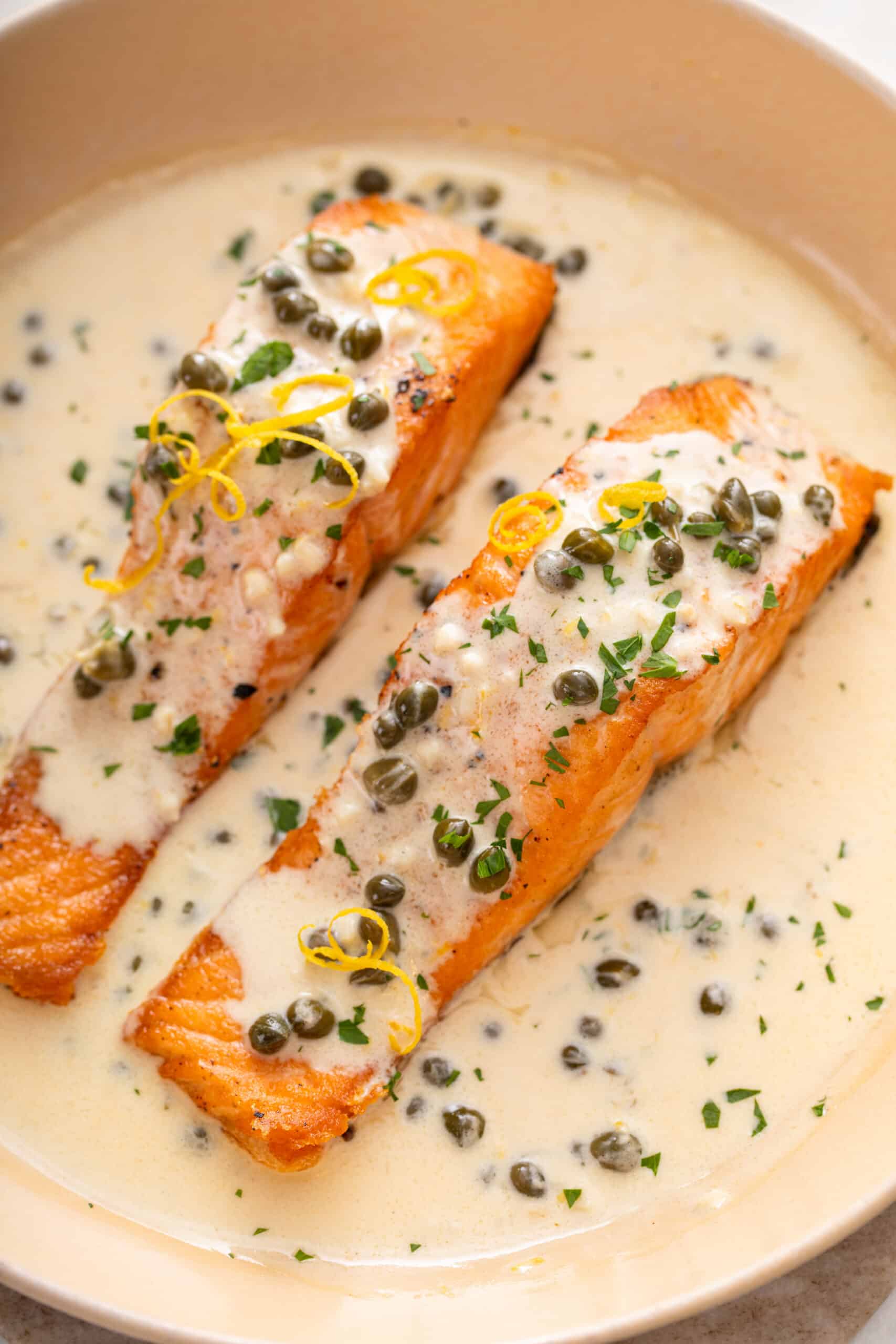
I love salmon — not just for how it tastes but for everything it brings nutritionally. High in protein, rich in omega-3 fatty acids, and packed with vitamins and minerals, it is one of those ingredients that makes you feel as good as it tastes. In particular, it behaves beautifully in a piccata-style sauce, the same way it anchors a smoked salmon charcuterie board. The flaked pieces absorb the lemon and caper brine, and the cream softens the brightness just enough to feel both elegant and comforting. You can serve it over pasta, rice, whipped potatoes, or roasted vegetables and it adapts to each one without losing what makes it exceptional.
What makes this version stand out from a classic piccata is the cream — it softens the sharpness of the lemon while still allowing that signature brightness to come through in every bite. Combined with garlic, a generous pour of chicken broth, and the salinity of capers, the sauce coats the pasta beautifully and tastes like something you ordered rather than something you made on a Tuesday. It earns a permanent place in your dinner rotation from the very first plate.
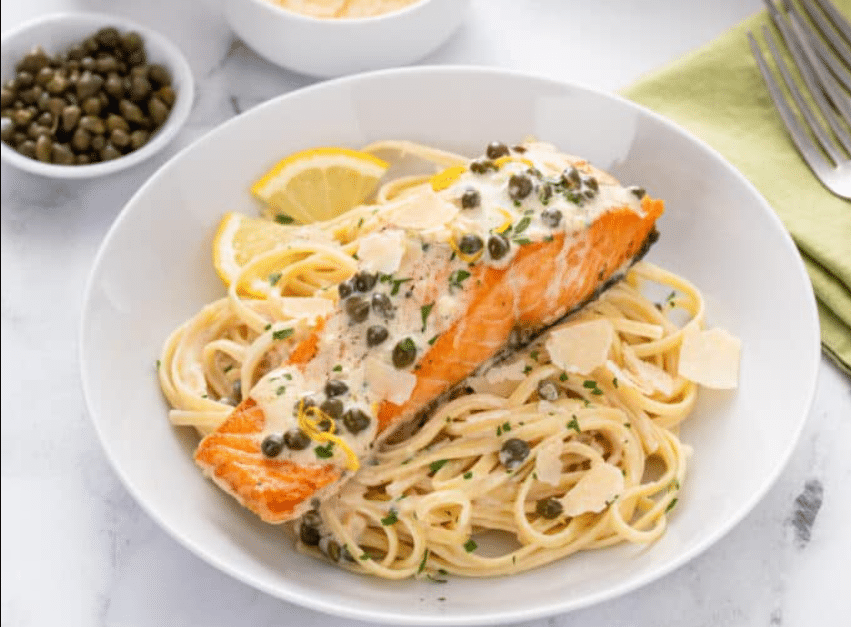
When I Love Serving Creamy Lemon Salmon Piccata Pasta
Weeknight Dinner
Under 30 minutes, one pan, and a result that tastes like you put in far more effort than you did. This is the weeknight dinner I make when I want something that feels genuinely special without sacrificing the evening to get it on the table. Moreover, the cleanup is minimal — which is always part of the appeal on a busy night.
Date Night In
This dish was made for a date night at home. It is elegant, it photographs beautifully, and it comes together while you are both in the kitchen with a glass of white wine in hand. In particular, the lemon cream sauce feels indulgent in a way that makes the evening feel considered rather than casual.
Casual Dinner Party
This is one of my most reliable dinner party dishes precisely because it scales easily and comes together quickly. Double the recipe for four guests with no additional complexity. Furthermore, the piccata sauce can be built in advance and the salmon seared just before serving. That means almost no time in the kitchen while your guests are at the table.
Supper Club Main Course
Served at a Supper Club dinner, this pasta arrives at the table looking like a restaurant plate and tasting like it took hours. The salmon flaked into the cream sauce, the lemon brightness, the caper salinity: every element holds up when plated individually for a group.
When You Want to Feel Good About What You Ate
Salmon is one of those proteins that tastes indulgent and eats nutritiously. High in omega-3 fatty acids, rich in protein, and genuinely satisfying — this is the dinner I reach for when I want something that delivers on every level. Equally important, it never feels like a compromise.
Night That Calls for Something Special
Without a doubt, this is the recipe I reach for when I need a guaranteed result. Tuesday or Saturday, cooking for myself or for guests, it delivers. All things considered, a dish this good and this easy earns a permanent place in any rotation.
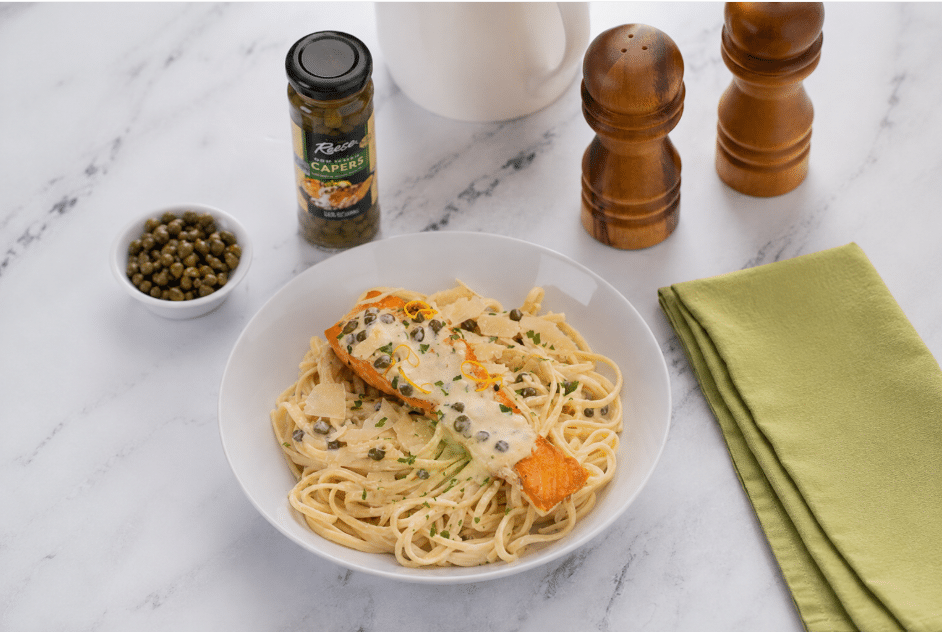
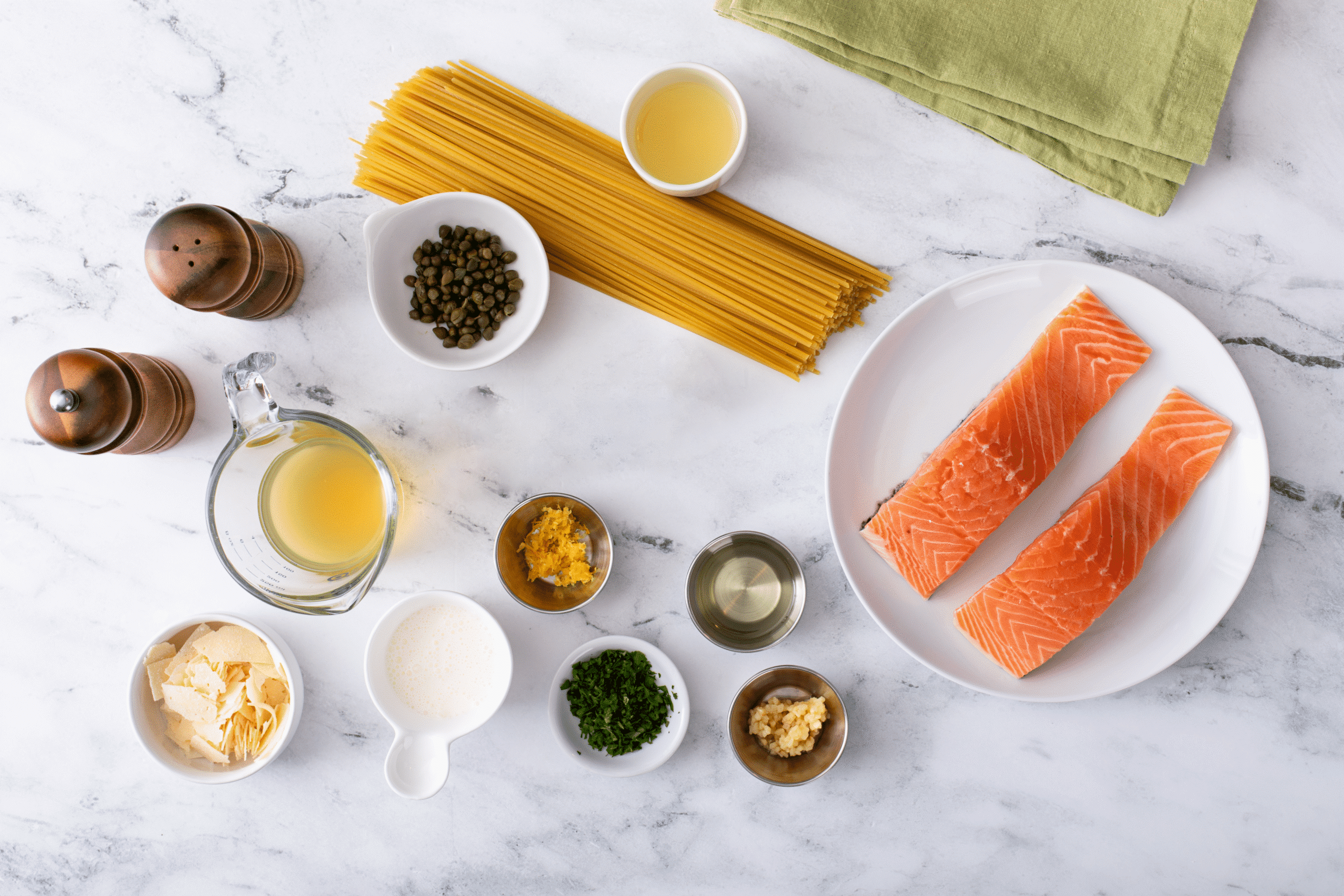
Ingredients
Each ingredient in this recipe serves a purpose, creating a sauce that feels layered and complete.
Pasta
For this we are using linguini noodles but you can use whatever pasta for this that you want.
Salmon
We are using fresh salmon filets for this – you can also use frozen if needed.
Olive oil
For pan frying, olive oil is my preference — it browns the salmon without burning.
Garlic
Of course there is garlic. I can think of very few cream sauces that are better without it. I think it is always a solid staple.
Chicken broth
To give the sauce deeper flavor. You can also use a dry white wine like a Pinot Grigio, or a Chardonnay to add a little spin on the sauce.
Lemon
For this I am using both fresh lemon juice and lemon zest for maximum brightness and zesty flavors.
Capers
Capers are a solid staple for me. They just give a great flavor and of course add to that signature piccata taste.
Heavy cream
To add a luxurious creamy texture to the sauce.
Shop Erica’s Pick
Everything I Love for this recipe

Large Skillet
A wide, heavy-bottomed skillet is essential for this recipe — it gives the salmon room to
sear properly without crowding, and the surface area allows the cream sauce to reduce
evenly. This is the pan that does all the work from start to finish.

Pasta Pot
A wide, deep pot with plenty of room for the pasta to move freely in the boiling water
ensures even cooking and prevents the linguini from clumping. A built-in strainer lid
makes draining effortless.
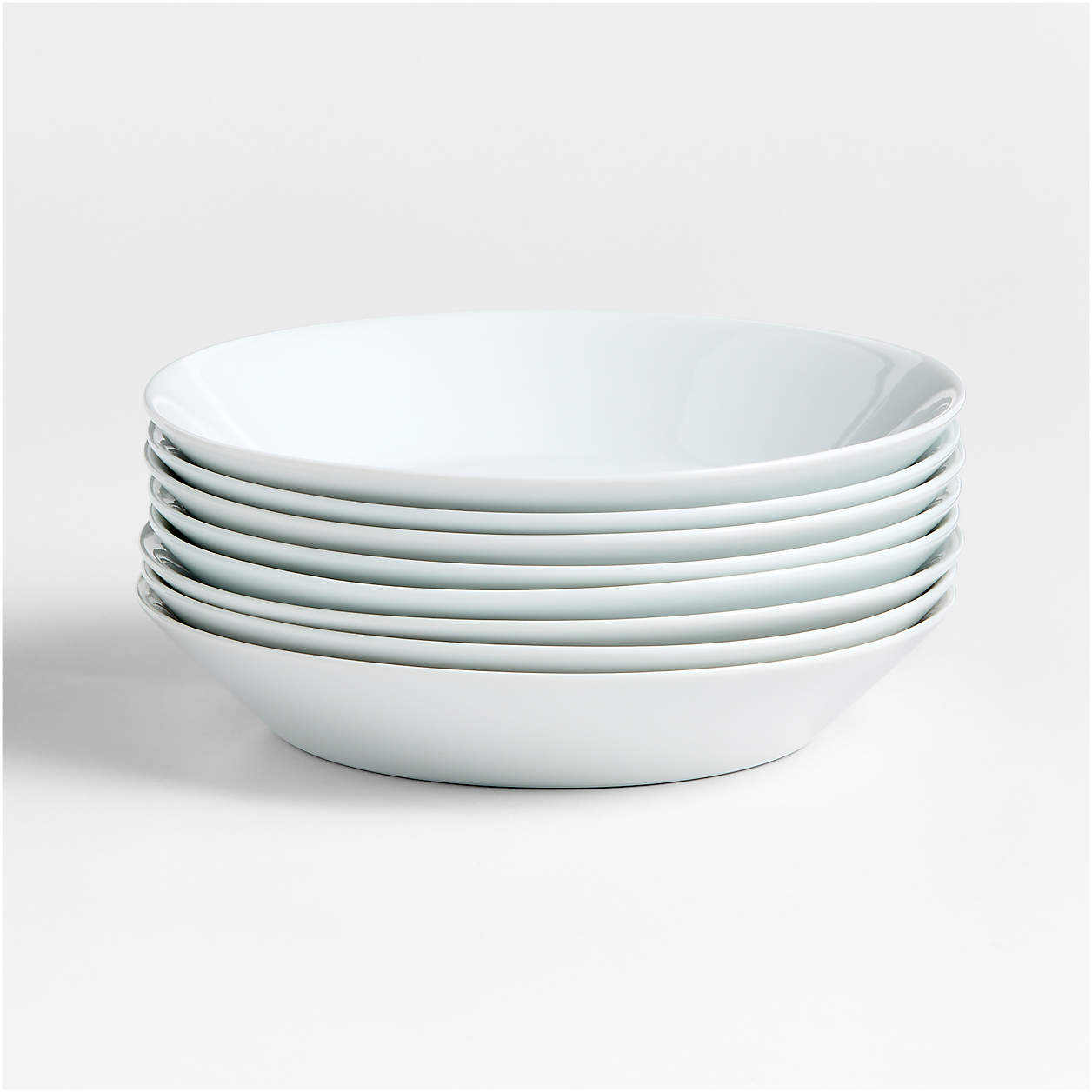
Pasta Bowls
Wide, shallow pasta bowls present this dish beautifully — the cream sauce pools in the
bowl, the salmon sits visibly on top, and the parsley and Parmesan finish photograph
stunningly. The right bowl turns a weeknight dinner into a restaurant moment.

Microplane
Freshly grated Parmesan melts into the sauce in a way pre-shredded cheese simply cannot. A fine microplane or box grater is worth having on hand for this recipe and every pasta dish you will ever make.
How To Make Creamy Lemon Salmon Piccata Pasta
Pat the Salmon Completely Dry
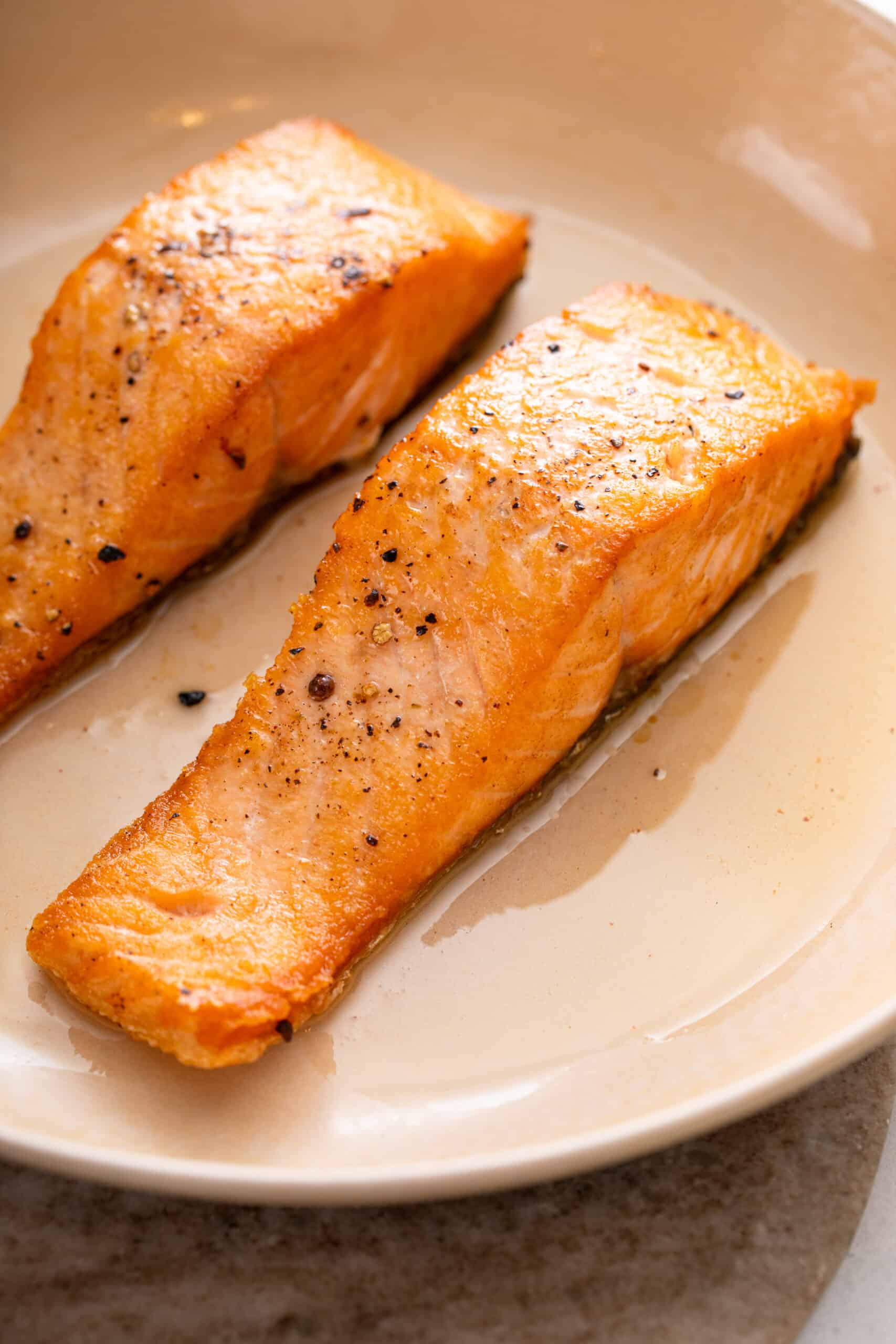
This is the most important step in the entire recipe and the one most home cooks skip. Surface moisture on the salmon prevents proper searing — instead of a golden, caramelized crust, you get pale, steamed fish. Use paper towels and press firmly on both sides before seasoning. The dry surface is what creates the textural contrast between the seared exterior and the tender, flaky interior.
Use a Hot Pan
Let the olive oil heat until it is shimmering before adding the salmon. A hot pan sears the surface immediately and builds the fond, the browned bits left on the skillet. That fond is what gives the sauce its depth when you deglaze with broth or wine. Moreover, do not move the salmon once it hits the pan. Let it cook undisturbed for the full 3 to 4 minutes on each side.
Deglaze and Scrape
When you add the chicken broth after the garlic, use a wooden spoon to scrape up every browned bit from the bottom of the pan. Those caramelized bits — the fond — dissolve into the sauce and add a depth of flavor that you cannot get any other way. In particular, do not rush this step — let the broth bubble up and do the work.
Flake the Salmon Gently
When you return the salmon to the sauce, flake it into generous, irregular pieces rather than small uniform bits. Large pieces of salmon give you a substantial, restaurant-worthy result. They hold their texture in the sauce and look as impressive as they taste. On the other hand, over-flaking the salmon into tiny fragments makes it disappear into the pasta rather than being a featured element.
Reserve Pasta Water
Before you drain the pasta, scoop out at least ¼ cup of the starchy cooking water and set it aside. If the cream sauce thickens more than you would like when you add the pasta, a splash of pasta water loosens it instantly without diluting the flavor. Given how quickly the sauce can tighten over heat, having the pasta water ready is the difference between a perfect sauce and one you are trying to rescue.
Step 1.
Cook the pasta. According to package instructions until al dente. Drain and set aside.
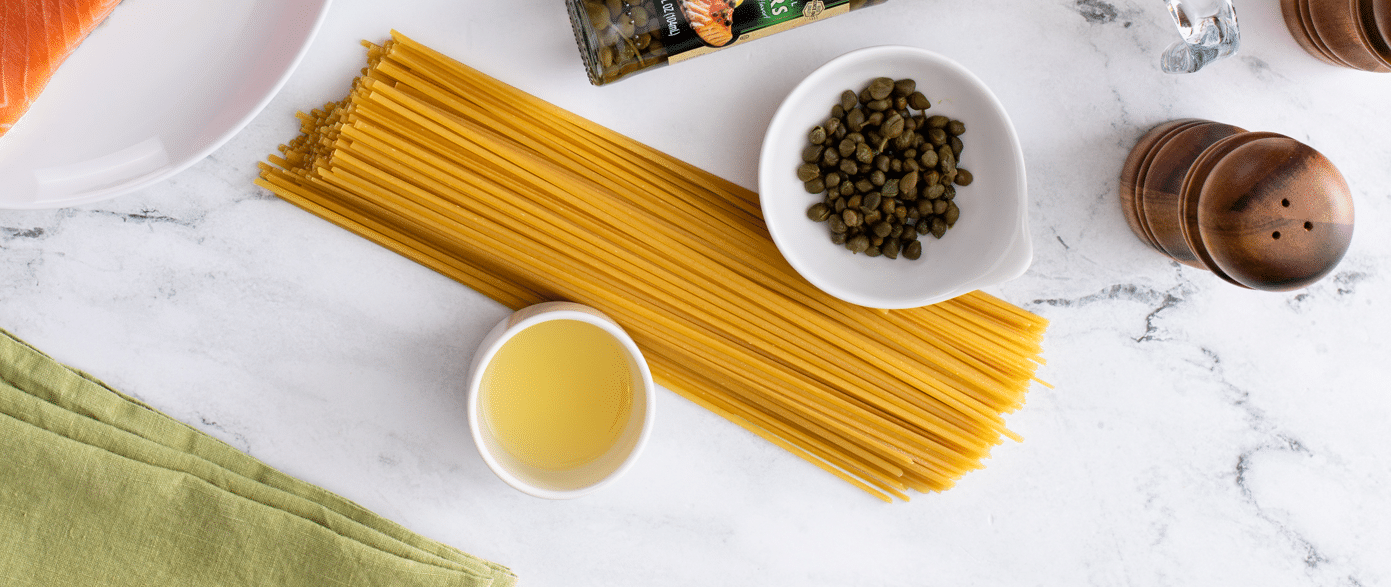
Step 2.
Season & Sear. Season the salmon with salt and pepper, then sear in olive oil over medium-high heat for 3–4 minutes per side until cooked through. Remove from the skillet and set aside.
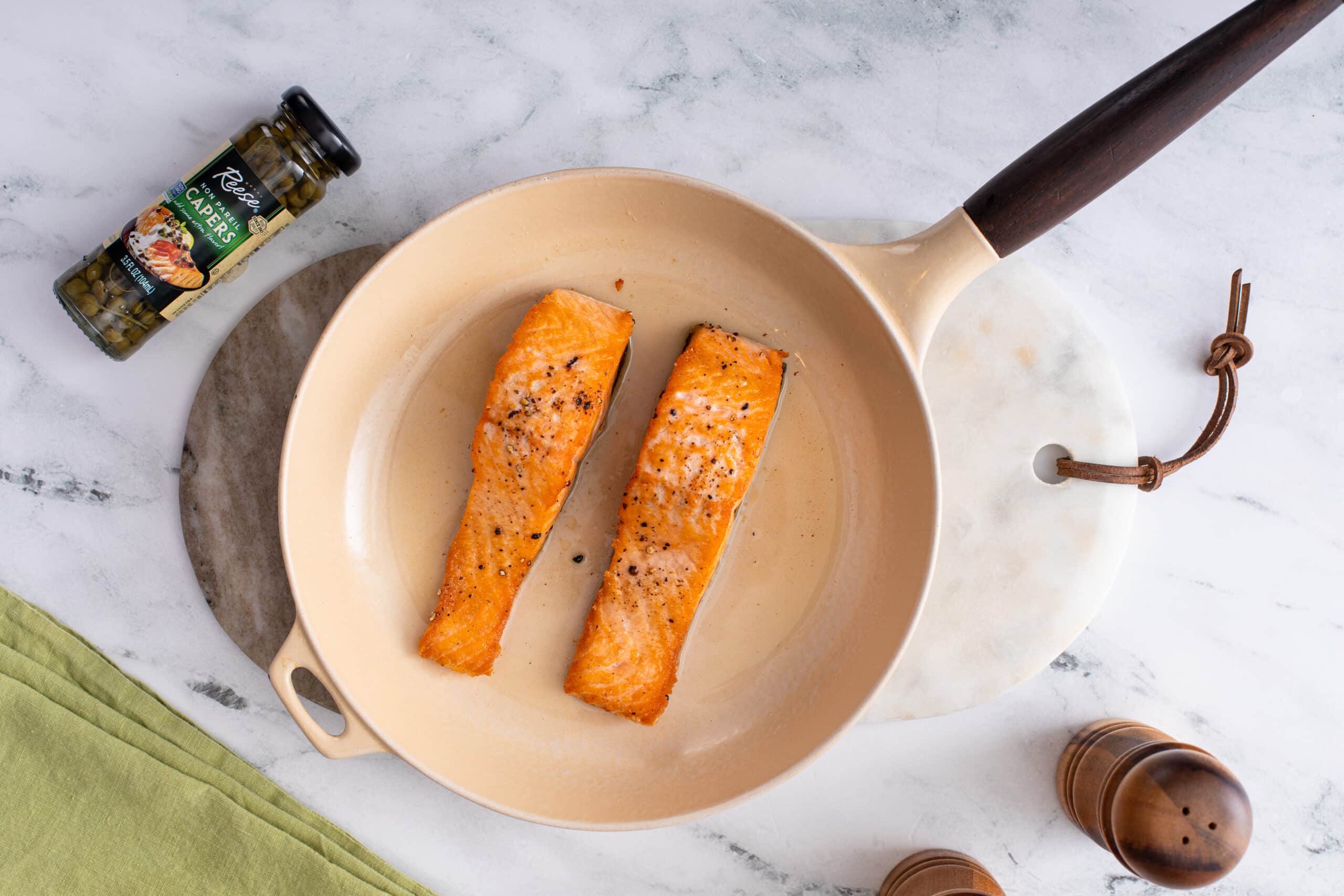
Step 3.
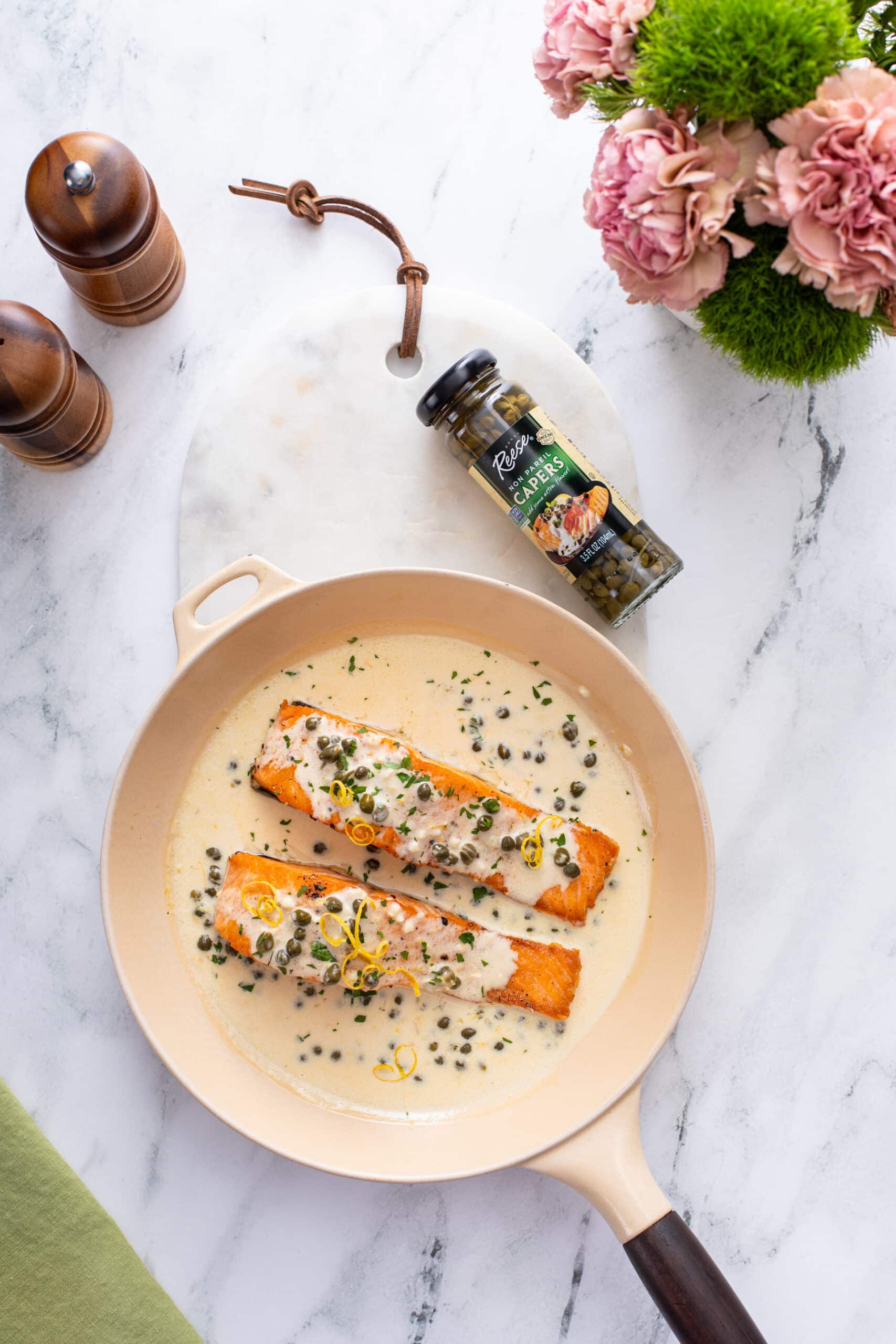
Make the Sauce. Sauté the garlic until fragrant, then add the chicken broth and scrape up any browned bits. Stir in the heavy cream, capers, lemon zest, and lemon juice, then simmer for 2–3 minutes until slightly thickened.
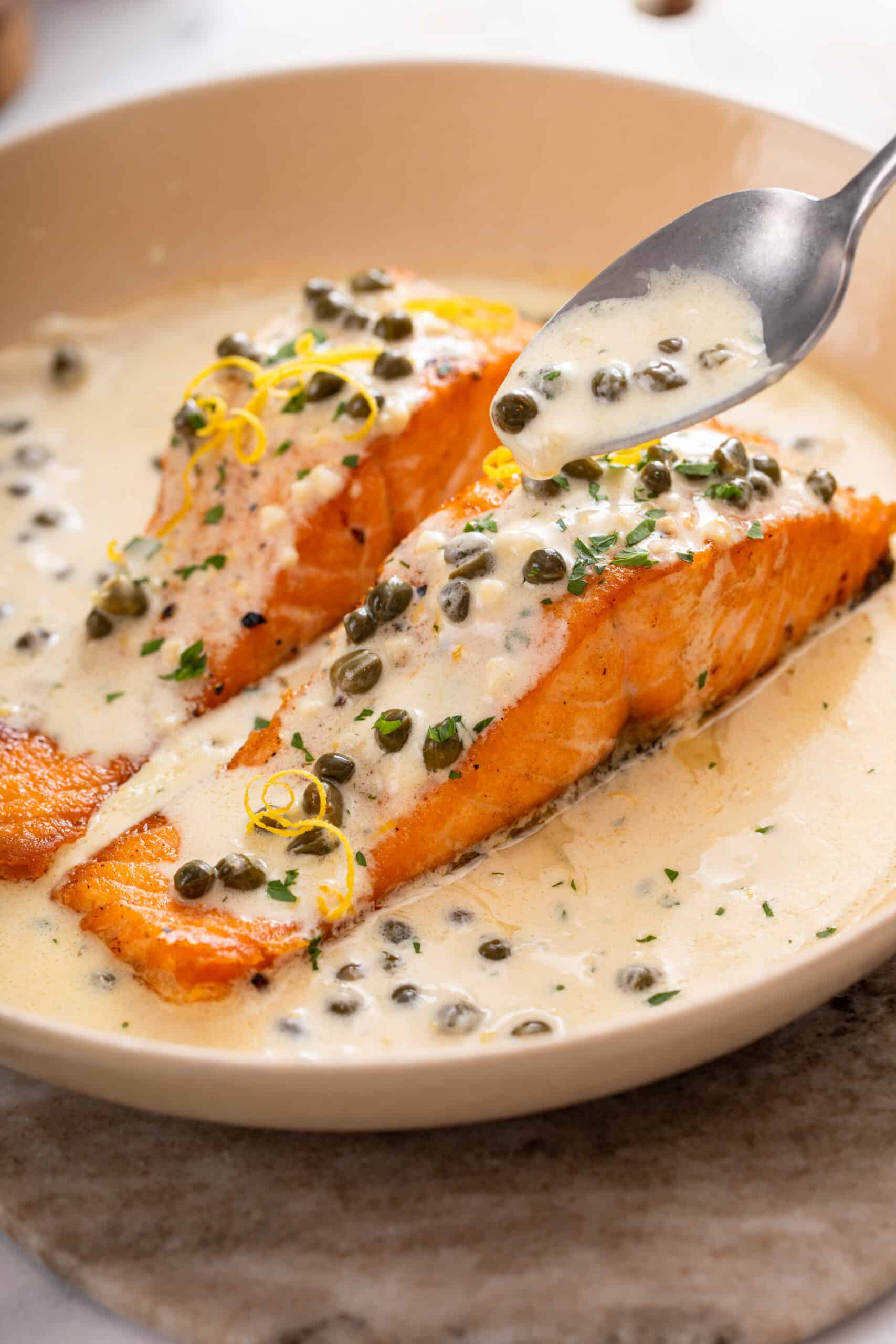
Step 4.
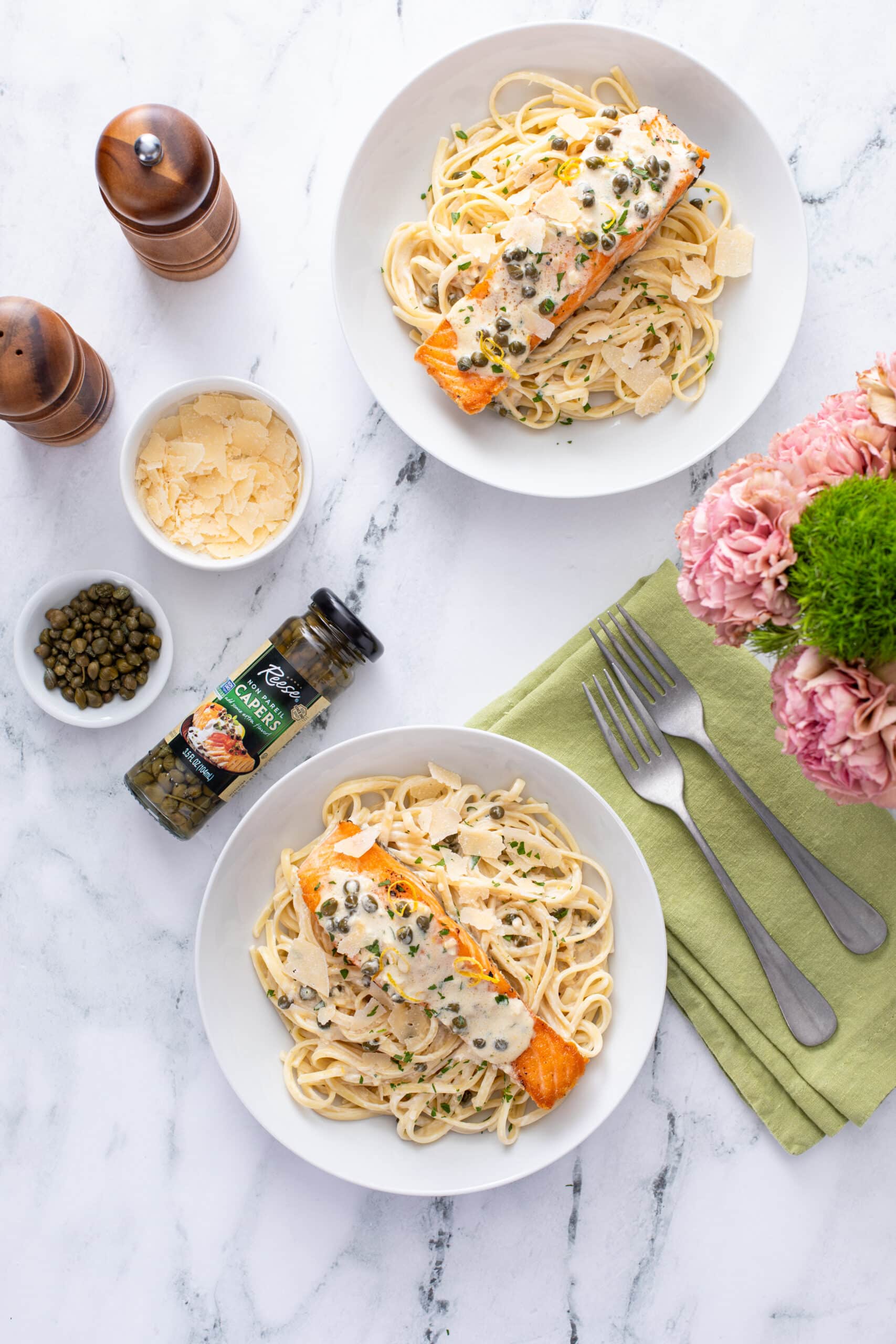
Combine & Serve: Add the cooked pasta to the creamy sauce and toss until every strand is evenly coated. Top with the cooked salmon, garnish with Parmesan and fresh parsley if desired, and serve immediately.
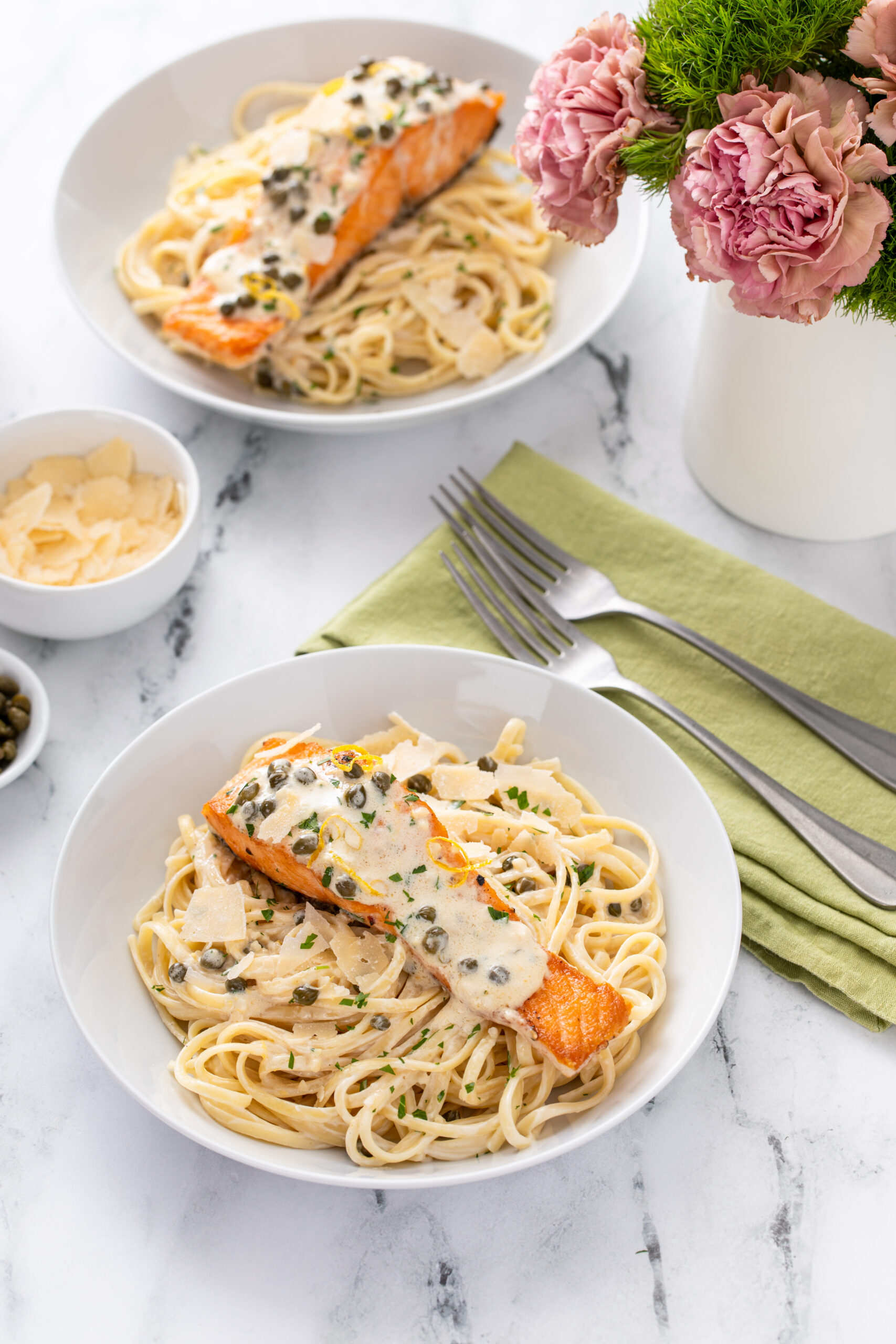
Quick Video of Serving Creamy Lemon Salmon Piccata Pasta
Creamy Lemon Salmon Piccata Pasta Variations
This dish adapts beautifully to different preferences, dietary needs, and what you have on hand.

Shrimp
Shrimp is the most natural swap — it cooks even faster than salmon and absorbs the piccata sauce beautifully. Chicken breast or chicken thighs return the dish to its classic piccata roots. For a fully seafood version, scallops seared in the same skillet before building the sauce create an even more elegant result. Furthermore, any white fish — halibut, cod, or tilapia — works well in place of salmon for a lighter, more delicate flavor profile.
Linguini
Linguini is the preferred pasta here. The long strands catch the sauce beautifully and create a classic presentation. Angel hair and spaghetti both work equally well. For a short pasta option, penne or rigatoni hold the cream sauce inside the tube and deliver a different but equally satisfying result. Moreover, this dish works over rice, whipped mashed potatoes, roasted Yukon Gold potatoes, or alongside roasted asparagus or broccolini for a low-carb option.
Add Vegetables
Baby spinach wilts beautifully into the cream sauce in the final minute of cooking — add a generous handful just before tossing the pasta and it integrates seamlessly. Cherry tomatoes halved and added with the cream create a fresh, bright pop of acidity. Roasted asparagus or broccolini completes the plate. It adds color and nutrition without complicating the dish.
Dairy-Free
Replace the heavy cream with full-fat coconut cream for a dairy-free version. The coconut adds a subtle sweetness that works surprisingly well with the lemon and capers. Alternatively, a high-quality oat-based cream substitute also works in this sauce without significantly altering the flavor.
What to Serve With Creamy Lemon Salmon Piccata Pasta
This dish is rich and complete on its own, but the right accompaniments round it into a full dining experience.
Green Salad
The Apple and Goat Cheese Salad with balsamic vinaigrette is an exceptional pairing. The balsamic and the crisp apple cut through the richness of the cream sauce. An arugula salad with lemon vinaigrette and shaved Parmesan is equally perfect and echoes the citrus notes already present in the pasta.
Crusty Bread or Garlic Bread
A warm slice of sourdough or garlic bread served alongside this pasta gives you something to drag through the remaining sauce in the bowl — which is, without a doubt, one of the best bites of the entire meal. Furthermore, it rounds out the dish into a complete and satisfying dinner without adding any additional preparation.
Drink Pairing
A crisp, dry white wine is the natural pairing for this dish. Pinot Grigio is the classic choice — its clean acidity and light body complement the lemon and cream without competing. Sauvignon Blanc brings a slightly more herbaceous quality that works beautifully alongside the capers and parsley. For guests who prefer red, a very light Pinot Noir can work, though white is always the better match for a lemon cream sauce.
Roasted Vegetables
Roasted asparagus, broccolini, or green beans add color and texture. They make the plate feel complete. Toss with olive oil, salt, and a squeeze of lemon before roasting at 400°F for 15 to 20 minutes — the lemon ties everything together and reinforces the flavor thread running through the whole meal.
Creamy Lemon Salmon Piccata Pasta Storage
Freezer
Cream-based pasta sauces do not freeze well — the sauce separates upon thawing and the pasta becomes soft. This dish is best enjoyed fresh or within 48 hours of making. If you need to prep ahead for a larger gathering, freeze the salmon separately uncooked and make the sauce fresh on the day.
Refrigerate
Store leftovers in an airtight container in the refrigerator for up to 2 days. The cream sauce will thicken as it cools — this is normal. The salmon is best within the first day for optimal texture, as it can become slightly dry after refrigeration. Given how quickly this dish comes together, making it fresh is always the best option when time allows.
Reheating
Reheat gently in a skillet over low heat with a splash of chicken broth or heavy cream to loosen the sauce. Stir gently and avoid high heat, which can cause the cream to break and the salmon to overcook. A microwave works in a pinch at 50% power in 60-second intervals — but the stovetop method always produces a better result.
Make Ahead for Entertaining
The piccata sauce can be made up to 2 hours in advance and kept warm on the lowest heat setting, stirring occasionally. Cook and sear the salmon just before guests arrive, flake and add to the warm sauce, then cook the pasta fresh and toss everything together at the last moment. As a result, the active cooking time while guests are present is under 15 minutes.
Creamy Lemon Salmon Piccata Pasta FAQs
Can I make this ahead of time?
This dish is best served immediately after cooking, when the salmon is freshest and the sauce is at its silkiest. For entertaining, build the sauce up to 2 hours ahead and keep warm on low. Sear the salmon and cook the pasta fresh just before serving. On the other hand, leftovers reheat reasonably well within 24 hours with a splash of broth to loosen the sauce.
Can I use frozen salmon?
Yes — defrost completely in the refrigerator overnight and pat the filets very dry before seasoning and searing. Frozen salmon releases significantly more moisture during cooking, which is why the pat-dry step is even more critical than it is with fresh. Given how much moisture affects the sear, taking an extra minute with paper towels makes a meaningful difference in the final result.
What pasta shape works best?
Linguini is the preferred choice — the long, flat strands catch the cream sauce beautifully and create a classic presentation. Angel hair and spaghetti are both excellent alternatives. For short pasta, penne or rigatoni hold the sauce inside the tube and deliver a different but equally satisfying result. In particular, avoid very delicate pastas like vermicelli, which can become too soft when tossed with the warm sauce.
Can I use canned salmon?
Canned salmon can work in a pinch, but it will not produce the same result as fresh or properly defrosted frozen filets. Canned salmon lacks the texture for searing and will not deliver the same flaked, substantial pieces in the sauce. Furthermore, the flavor is significantly more muted. Fresh or frozen filets are always worth the effort for this dish.
What can I substitute for capers?
Capers bring a very specific briny, slightly tart quality that is central to the piccata flavor profile. If they are unavailable, finely chopped green olives are the closest substitute — they provide similar salinity and a comparable visual element in the sauce. A small amount of pickle brine added to the sauce can also approximate the briny quality of capers in a pinch.
How do I know when the salmon is done?
Salmon is done when it is opaque throughout and flakes easily when pressed gently with a fork. The internal temperature should reach 125°F to 130°F for medium — slightly translucent in the very center — or 145°F for fully cooked. Given that the salmon will continue to cook briefly after being removed from the skillet, pulling it just before it reaches your target temperature produces the best final result.
Can I double this recipe?
Yes — this recipe doubles easily for four servings. Sear the salmon in two batches rather than crowding the pan, which ensures a proper sear on each filet. Build the sauce with doubled quantities and combine everything in the largest skillet you have or a wide Dutch oven. The timing stays essentially the same.

Creamy Lemon Salmon Piccata Pasta
Ingredients
- 8 oz linguini or pasta of choice
- 2 salmon filets
- 3 tbsp olive oil
- Salt and Pepper to taste
- 2 cloves garlic minced
- ½ cup chicken broth (or dry white wine — Pinot Grigio or Chardonnay)
- ½ cup heavy cream
- 2 tbsp capers drained
- 1 zest of lemon
- juice of ½ lemon
- 2 tbsp parsley chopped
- freshly grated parmesan cheese for serving
Instructions
- Cook the pasta in a large pot of salted boiling water according to package instructions until al dente. Reserve ¼ cup pasta water before draining. Drain and set aside.
- Pat the salmon filets completely dry with paper towels. Season generously on both sides with salt and freshly cracked black pepper.
- In a large skillet, heat the olive oil over medium-high heat until it shimmers. Add the salmon filets skin-side up and cook for 3 to 4 minutes per side, or until golden and cooked through. Remove from the skillet and set aside.
- Reduce the heat to medium. In the same skillet, add the minced garlic and cook for about 1 minute, stirring constantly, until fragrant. Do not let it brown.
- Pour in the chicken broth and scrape up any browned bits from the bottom of the skillet with a wooden spoon. Let it reduce for 1 minute.
- Reduce the heat to medium-low and stir in the heavy cream, capers, lemon zest, and lemon juice. Simmer for 2-3 minutes, until slightly thickened.
- Flake the cooked salmon into bite-sized pieces and return to the skillet. Add the cooked pasta and toss gently until everything is well coated in the creamy lemon sauce.
- Remove from heat. Sprinkle with fresh parsley and serve immediately, topped with freshly grated Parmesan cheese.
Notes
KEEP HOSTING
Turn dinner into an occasion — a bistro classic, an elegant pour, and a champagne bar to make it sparkle.

The Perfect Steak Frites
Make it surf-and-turf night with this classic bistro pairing.
Get the Recipe →
The Perfect Peartini
A crisp, elegant martini to sip alongside the lemony pasta.
Pour a Glass →
How to Create the Perfect Champagne Bar
Add a little sparkle to your next dinner gathering.
Keep Reading →Final Thoughts
This Creamy Lemon Salmon Piccata Pasta is the kind of recipe that makes you feel like a genuinely skilled cook — because the technique is simple but the result is exceptional. One skillet, 30 minutes, and a dinner that tastes as good as anything you would order at a restaurant. Moreover, it adapts to whatever you have on hand, works for any occasion from a Tuesday night to a dinner party, and never fails to impress. All things considered, the best weeknight recipes are the ones that make you feel good about the effort and even better about what you ate. In the final analysis, this salmon piccata pasta does both — and that is exactly why it belongs in your permanent rotation. On the nights it does not, my baked chicken gnocchi is the other pasta I lean on.
If you try this, I’d love to know—would you keep it classic, or experiment with your own variation?

Erica A. Thomas
Founder of Eating With Erica
SAVE NOW, MAKE LATER!